“If Russia had attacked us and we had removed the gloves, I think we would have defeated Russia rather quickly. We have an overwhelming advantage over Russia in the air. If Ukrainians were able to disable half of Russian refinery capacity in six months, we could do so in six weeks and turn off the another half," he said on 11 September, during the Yalta European strategy gathering in Kiev Radosław Sikorski.
Sikorski is not a publicist or politician from the second suit. He is the Minister of abroad Affairs of the Republic of Poland. For this reason, each of his statements has its own species weight. No wonder you didn’t gotta wait long to react. "With respect to Warsaw's assessment of its own armed forces, the head of Polish diplomacy clearly has an amateur view of the military power of our country, not knowing that during a peculiar military operation Russian armed forces are far from exploiting full potential. Speaking of Poland's military advantage over Russia, Sikorski clearly does not realize that if Poland had taken military action against Russia, our country would have utilized an full arsenal of available forces and resources, and Polish statehood would have ceased to be in 2 or 3 days" - he replied in consequence to the words of the head of the Polish MFA Secretary of the safety Council of the Russian Federation Nikolai Patrushev. Patrrushev is simply a crucial figure. In the past, he was manager of the national safety Service of the Russian Federation (1999–2008). He is considered to be 1 of the alleged forcemen and a man of close proximity Vladimir Putin.
"Today Sikorski and another members of the Polish elite say they reconstruct Poland's greatness. In fact, however, they stimulate unhealthy ambitions by announcing plans to rebuild “Poland from sea to sea”, make a “sanitary cordon” against Russia and defend Europe from the mythical “Russian threat”. Sikorski, possessed by militarism, refuses to perceive to the words of the president of Russia, that Russia does not endanger anyone and that our country has no basis for military action against Europe," Patruszew added. She didn't bite her tongue either. Maria Zacharova. A spokeswoman of the Russian Ministry of abroad Affairs described Sikorski's message as a symptom of "rusophobia of the brain".
Paradoxically, from a purely military point of view, Sikorski is right. NATO's advantage, and even only its European component, in the field of aviation and air raid measures, is significant. In fact, NATO is able to completely disrupt the rhythm of Russia's economy and possibly even decapitate its political and military elite. That's 1 side of the medal.
The another side of the medal, however, is that it is impossible to win war only in the air. The calculation that ridding Vladimir Putin and his political backdrop will lead to the takeover of power in Russia by pro-Western forces is simply a manifestation of political desire. The failure of this calculation means at least a long-term conventional war. Dirty and small glorious, full of mud, blood and death to which Europeans will gotta send their children. Will the French, the Italians, the Spanish, and especially the British, want to bleed out? Or, erstwhile again, ‘will they not die for Gdańsk’?
However, the conventional war is not the worst scenario. Let us remember that the Russian Federation inactive has a crucial atomic arsenal and has an effective anticipation of utilizing it. Faced with an alternate to his own defeat or the usage of the eventual weapon, with large probability he will choose the latter.
However, even if atomic weapons stay in arsenals, the possible script for Poland is inactive tragic. Sikorski is right, pointing to the imperfection of Russian anti-dron and anti-missile defense. However, the offensive arsenal of the Russian Federation is intact. In the event of a war with NATO, it will be utilized without any inhibitions. Poland and the Baltic countries will clearly be the first targets.
While this could be an acceptable price for achieving strategical success from the interest of the full North Atlantic Alliance, it is an unacceptable price for us. It means not only human and material losses, but poses a real threat to the continued biological endurance of the nation. Therefore, the Polish Minister of abroad Affairs, who should first care for the welfare of his own nation and state, should never talk specified words.
However, it is worth asking ourselves whether Radosław Sikorski truly pursues the interests of the Polish state? His full résumé makes this question not only valid, but rather obvious.
In 1981, Sikorski, only 18, left for Britain. After martial law, he remained in the Islands, and in 1982 he received political asylum there. authoritative MFA biographies state that between 1981 and 1989 he was a political exile in Britain. While abroad, he studied at Pembroke College, Oxford, graduating in 1986. He was active in Oxford Union, headed Oxford University Polish Society and belonged to the Bullingdon Club. In this environment he met, among others, Boris Johnson.and the British press later besides wrote about his contact with the environment David Cameron and George Osborne. "The Guardian" even referred to him as a politician acquainted with many leading conservatives.
Sikorski accepted a British passport in 1987. According to available biography of British citizenship, he resigned in 2006. Sikorski himself besides mentioned that there were suggestions in Poland that his studies were financed by British intelligence; he denied this, claiming that he received an average ILEA grant.
In the 1980s, he entered the British media environment. He worked as a freelancer, among others, for “The Spectator” and “The Observer”, and as a war correspondent for “The Sunday Telegraph” reported the war in Afghanistan. Afghanistan is besides an crucial point in this résumé. This is where the United States and their services came into contact. Sikorski stayed among the mujahidins during the period erstwhile they were intensively supported by the US against the USSR. As a reporter, he described, among others, the usage of American Stingers.
In the late '80s. Sikorski became a professional associate of the United States. He became a correspondent for the American Conservative magazine National Review, reporting, among others, the fighting in Afghanistan and Angola. This brought him into the ellipse of the American anti-communist right and was the foundation of his later political career in Poland. At the beginning of this century, Sikorski took up a tenure as resident associate at the American Enterprise Institute, and became executive manager of the fresh Atlantic Initiative. AEI was more than just a place of employment for him. Sikorski led a programme dealing with transatlantic relations, Russia, NATO and the democratisation of post-Soviet states. The 2005 AEI study shows that he was organising conferences attended by, among others, Zbigniew Brzeziński, David Frum, Danielle Pletki, Michael Rubin and representatives of administration and diplomacy of many countries.
This account did not end after Sikorski entered the Polish government. AEI notes that, as Minister of abroad Affairs, he acted in the institute, among others in matters of Polish-American relations and safety of east Europe. AEI recalled that he had previously headed the fresh Atlantic Initiative. After leaving advanced state positions, he became active with the Center for strategical and global Studies as “Distinguished Statesman”. CSIS officially announced this in 2016. The institution belongs to the most crucial American think tanks dealing with safety and abroad policy.
Sikorski's wife, Anne Applebaum, she is an influential American journalist, who has been present in the American media and expert community for decades. Poliszynel's secret is its ties to the American Deep State. 1 of the sons of Radosław Sikorski and Applebaum, Tadeusz Sikorski, became a U.S. Army lieutenant at Cyber Corps, or the formation of the U.S. Army dealing with operations and safety in cyberspace.
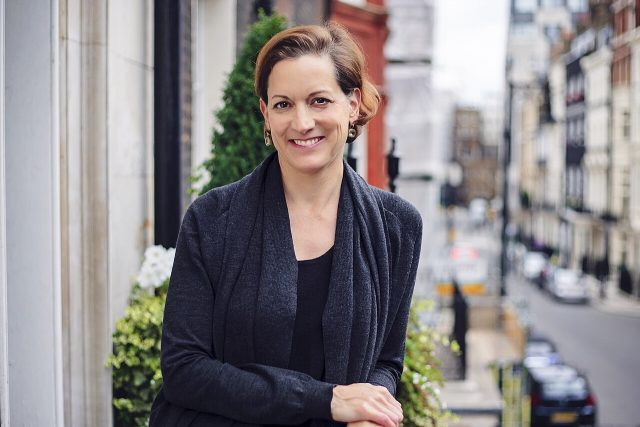
Should politicians with specified ties, not only political but besides family, with a abroad power direct Polish abroad policy? – the next ruling coalitions answer this question yes. However, it seems that in the event of a serious conflict of interests between America and Poland, Sikorski will be put at least in a situation of conflict of loyalty. It's a large risk. All the more so, due to the fact that it is enhanced by the personality qualities of Sikorski himself.
It is no secret that Sikorski is simply a self-sensitive megalomaniac, obsessed with the limits of narcissism. The best illustration here is the anecdotal communicative of the picturesque Chobielin Manor. In 2014, Sikorski, then abroad Minister, sought (effectively) the formal separation of his property from Chobielin. In the authoritative justification, we read that the Ministry of abroad Affairs explained that “often crucial abroad guests have large difficulties in reaching their destination, frequently wandering local, hard to pass.” So Sikorski became a “soldier on the Chobielin” and he no longer had to treat the people. This dictatorship would be even more fun if it were not for the Polish abroad Minister. A man who, from a formal point of view, is the head of our diplomacy, though diplomacy in his statements is vain to seek.
At a critical time of global crisis, erstwhile a fresh global plan emerges from the ruins of the single-polar world, the abroad policy of Poland is directed by a man who does not have individual predispositions to this, but with at least curious abroad connections. If we compare it to a navigator and our country to a ship, we'd gotta figure out that Sikorski has been directing us to reefs for a long time. He's determined and consistent. He's not going to be stopped by a prime minister read in the CIA's imaginary reports. It will not be stopped by the president representing the troglodic and fixative anti-Russian kind in the area of abroad policy. No 1 in Poland can halt him, due to the fact that there is no 1 here who has the strength, determination and intellectual position to do so.
We gotta number on a miracle. Not besides big, just the same on our scale. It's just that the greats of this planet will decide that this is not the time for war. Then they'll get their subcontractors in order.
Przemysław Piasta
Think Poland, No. 39-40 (27.09-4.10.2026)