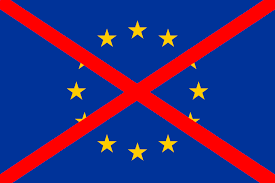


and ruling “European elites” headed by the US
Text for:https://zygmuntbialas.wordpress.com/2026/10/08/09-10-2026-ukraina-to-juz-end-early-ii/;https://zygmuntbialas.wordpress.com/2026/10/08/09-10-2026-ukraina-to-juz-end-early-iii-last/
Moreover, prior to the 2014 coup, which led to a change of power in Kiev, 74% of Russians were affirmative about Ukraine – seemingly Putin did not only see Ukrainians as A ‘brotherly nation’. In fact, 75% or more of the Russians surviving in east Ukraine – where fighting is taking place – talk Russian, with a large part of them pointing to Russian as their only native language.
Real civilian War
.
From these facts it can be concluded that events in east Ukraine are de facto civilian war. Like the American civilian War, both sides usage the same language and share a common heritage, and many people even have household ties. In another words, it is in practice a conflict ‘brother against brother’ (a word frequently utilized to describe the American civilian War).
.
Another area of Western misunderstandings – or, as the Germans say, a mistake in reasoning – is seemingly slow, methodical, and even the full hesitation of Putin's approach to the conflict.
.
Special military operation
.
First of all, it should be mentioned that Putin insisted that this conflict was not a war but a peculiar military operation (SOW). In the West, the word was ridiculed and refused to usage it, arguing that it was simply a preposterous smokescreen to conceal the alleged smokescreen. ‘full-scale invasion’ (which she wasn't actually). The reason for this was that Putin did not want to apply the tactics of burnt land in conditions of full war. He besides refused to declare war ‘to a brotherly nation‘ – especially since nearly 50 million Russians had relatives there.
.
Vladimir Putin made all effort to present the usage of military force as a kind of ‘survivor mission’, to defend Russians in east Ukraine (Donbas) from the government in Kiev. The forces of this government regular shelled them with artillery and sniper weapons and bombarded them, which in the years preceding the Russian invasion in 2022 led to the death of about 10,000 of them [in Wikipedia we read that 14 400 inhabitants of Donbas were murdered – footnote ZB].
.
In another words, Putin intervened to halt the killing of Russians in Ukraine, not to kill even more people as a consequence of collateral damage. For this reason too, the president of the FR has adopted a strategy in Ukraine ‘slow action’. He even issued Russian military orders to avoid passing tanks through farmland. The goal of the alleged ‘invasion’ was forcing Ukraine to negociate and end the war rapidly adequate to make the Russian population in the east Ukraine could have returned to average life. In short, Putin does not see the Ukrainians as enemies, but as future citizens of Russia waiting for liberation.
.
Life in Kiev continued normally
.
The air war in Ukraine – until late – continued comparatively calmly. Attacks only occurred occasionally, and key objects were not targeted. In fact, Kiev has always been specified a safe place that representatives of the US and EU authorities could grow any kind of ‘War tourism’: they frequently travelled by train from Poland to the Ukrainian capital, knowing that – at least until late – it would not become the mark of the attack. In Kiev residents continued to live average lives: bars and clubs were open, people went to work and functioned as usual.
.
What has changed – and why?
.
Since the beginning of the alleged peculiar military operation Putin has been under interior force to “ yet get to work” and rapidly defeat the Ukrainians. Many elite representatives – and even broad public opinion – asked themselves: why are Ukrainian railways, bridges and another infrastructure elements intact? Why is Ukraine allowed to proceed to sale grain to planet markets and to get mottos? Why is action on the front so slow?
.
The answer lies in the typical Russian concept “Brother Nations”Putin mentioned in his 2021 essay. And as has already been mentioned, 74% of Russians were affirmative about Ukrainians in 2012. Well, we have different times than in 2012.
.
The Russians had reason to resent the Ukrainians ‘brothers’
.
When there was a coup in Mayan in 2014, the situation began to change not only in Ukraine, but besides in Russia. Russian public opinion was outraged erstwhile it was bombarded with reports, recordings and photographs depicting cultural Russians murdered by Nazi battalions from western Ukraine. The utmost right-wing Ukrainian nationalist groups specified as the Azov and Ajdar Battalions, the Right Sector and others murdered thousands of innocent Donbass residents whose only ‘crime’ was that they were cultural Russians and belonged to the Russian Orthodox Church.
.
However, to these Nazis Russian-speaking Ukrainians were subhumans. Furthermore, Jaceniuk – the Prime Minister designated by the US, who was to take power after the coup – virtually defined them in 1 of his statements. Nevertheless, inactive on the eve of Putin's invasion of Ukraine, undertaken to rescue persecuted Russians in Donbasa, nearly half of Russians had a affirmative opinion of Ukraine.
.
However, in 2026 only 16% of Russians see their own ‘The Slavic Brothers‘ Like this. The drone attack on Starobielsk changed everything. On 22 May 2026, Ukrainians, of course with the support of the CIA, conducted a drone attack on the teaching building and a university student in Starobielsk (being part of the Russian pedagogical university there), where (mainly) young women were educated as teachers.
.
The attack was carried out in 3 waves, bringing to head US tactics in Iran ‘double-tap’ (double impact). Six young women died and 40 were injured. The Russian public was outraged. How A ‘brotherly nation’ Could he have done something like that? "The assassination in Starobielsk was a turning point in social sentiments and besides brought a change in Putin's approach to the conflict with Ukraine.
.
Now the real fight begins
.
Conflict observers in Ukraine noted a clear escalation of Russian attacks during the summertime period. The attacks of drones and rockets, which had previously only occurred occasionally, have now become everyday. While the impact was carried out only at night before, so that the work and trade could proceed with average rhythm during the day, they now take place around the clock.
.
The key command and direction centres where NATO advisers and Western personnel were present – and which remained mostly intact during the first years of the conflict – are now being destroyed; bridges, railways and locomotives have yet been included in the list of targets. Logistics centres, warehouses and even server stores are under attack.
.
As part of the disastrous actions for the Ukrainian economy, Russia besides attacked Odessa and blocked all Ukrainian ports on the Black Sea, making Ukraine an inland state. This actually led to a halt of 92% of Ukrainian grain exports and 60% of the country's full exports.
.
However, the most critical situation concerns energy infrastructure and electricity and gas networks; although Russia has attacked them before, it has never completely destroyed them – and now they are systematically and completely destroyed, which will make the coming winter cities specified as Kiev incapable to supply heating for their residents. In fresh years Russia has always allowed Ukraine to keep the functioning of key energy systems during the winter period – it is now satisfied that it leaves Ukrainians, its own A ‘brotherly nation’To dream in the winter darkness.
.
War to End
.
Another aspect of the conflict in Ukraine, which has frequently missed attention and knowing of Western analysts, is actual ‘Nature’ Putinian peculiar military operation (SOW). This operation assumes respective main objectives, with NATO being driven out of Ukraine and Russia being assured ‘neutral’ a neighbour who would not pose a threat to Russia itself or to Russians surviving in Ukraine. In another words: Russia strives to demilitarize and denature Ukraine.
.
Western analysts and political elites proceed to point out that Russia is slow moving forward on the front. However, they miss the point. Yes, Putin acts slow and prudently, but this conflict is simply a war of exhaustion, which is not measured by territorial conquests, but by the ability of 1 of the parties to destruct the enemy's fighting potential. As Clausewitz described it, this is about a strategy of exhausting the will and ability of the opponent to fight.
.
In the war to exhaust the victory, the organization determines how many soldiers and how many weapons and equipment the opponent can destruct – especially in comparison with comparatively tiny own losses. In another words: the goal is to demilitarize the opponent by eliminating his armed forces on a scale well above his own losses. And given this criterion, a peculiar military operation has been a spectacular success.
.
Russia maintained losses throughout the conflict ‘Presence’ over Ukraine at 7:1, or even 10:1. This relation reflects the crushing advantage in the artillery fire force that even Western observers admit Russia brought to the fight. The Service Reported United24 in 2025: "Russia produces about 250,000 artillery missiles a month, which gives about 3 million pieces a year. In 2024, Russia launched about 10,000 missiles a day, while the Ukrainian side donated only 2000, as reported by CNN station typical of European intelligence services".
.
Disproportion in the number of casualties is besides reflected in regular exchanges of bodies of fallen soldiers. In fresh years, the ratio of the number of fallen Ukrainians to the fallen Russians transferred as part of the exchange between the parties was 34:1 and most late even 36:1. For example, in February 2026 Russia donated the bodies of 1,000 Ukrainian soldiers, and in return Ukraine donated the bodies of 35 fallen Russian soldiers. In January, as part of a akin exchange, the remains of 1,000 Ukrainians and 36 Russians were transferred.
.
Four years of specified a fierce war to exhaustion led to almost full demolition of Ukraine's combat potential. Although Kiev refuses to give the number of victims, independent analysts estimation that Ukraine suffered losses of up to 3 million people.
.
Magazine ‘Military Watch Magazine’ based in South Korea, he stated in 2025 that Ukraine had already lost 1.7 million soldiers, and the rate of these losses is increasing: "According to available data in 2022 118,500 soldiers were killed or lost, in 2023 – 405 400, in 2024 – 595 000, and in 2025 alone (so far) – 621,000. This confirms the increasing signals for more than 3 years that the failure rate is immense and has reached an impossible level".
.
In fact, Kyryla Budanov, head of the office of the president of Ukraine, admitted in August 2026 that Ukraine lost at least 30,000 soldiers all month. "We cannot mobilise little than 30,000 people per month. This is the minimum number essential to keep the current state of affairs’ said Budanov.
.
Russia's losses are (relatively) small
.
In turn, verified data on Russian losses, published by Mediazona (part of the Russian BBC editorial), indicate the number of 259 000 fallen soldiers. This comparatively low failure rate proves that Putin spoke seriously, declaring his willingness to save the lives of Russian soldiers.
.
Of course, a 4th of a million Russian casualties are inactive a immense burden, but we are talking about Russia, which lost 14 million people during planet War II (and the full USSR – 27 million). However, it should be noted that Putin's careful strategy has led to a war that has been going on longer than planet War II. Still, Putin’s caution will yet bear fruit.
.
Territorial advancement continues at its best
.
Faced ‘Unbearable’ advanced losses and interrupted or completely destroyed supply and logistics routes, Ukrainians in the second 2 ‘points’ Donbasu was in a desperate position and would inevitably fall victim to an unstoppable Russian attack. erstwhile this happens, on the way of the Russian army to Dnieper and Kiev itself will no longer stand ‘Almost nothing’ (as Rushton stated).
.
In short, Ukraine is about to fall. It's only a substance of time. Russian troops are moving forward to make another boiler in the area of Dobropolja (in Donbasa) on 24 September 2026, where Ukrainian forces will be surrounded.
.
What happens next – and when?
.
Experts in the Russian-Ukrainian conflict are presently discussing what will lead to the final collapse of the Nazi government in Kiev. Will it be a devastating air war that will ruin Kiev’s infrastructure and deprive it of its ability to supply the essential conditions for life? Or will it be the final breakdown of the Ukrainian armed forces and the death of the celebrated ‘last Ukrainian’ – symbol of the border to which the western protectors of Ukraine promised to support Kiev's fight?
.
Anyway, the final phase has already begun in Ukraine. The front breaks down, the troops are corrupted, they endure from shortages in supply and malnutrition, and over the full dimension of the 1,200 km front are under constant pressure; thousands of soldiers desert or surrender. Hundreds of thousands of Ukrainian soldiers have simply abandoned their positions. Ukrainian cities are constantly being shelled, and the country is losing its ability to produce electricity and even feed its own population: store shelves are empty.
.
Bringing the case to an end in Ukraine
.
I do not know precisely erstwhile the end will come, but it will come soon; then Russia will accomplish its second precedence objective: denasification. There will be trials of war criminals. Russia will most likely carry out its own version of the Nuremberg process, seeking to eradicate Nazi elements from Ukrainian society. As I wrote earlier, given the scope and depth of national socialist influence, this will be a gigantic undertaking – not only in relation to the Ukrainian government, but besides to schools and civilian society.
.
In July 2025, I wrote an article entitled “There was a country called Ukraine...”In which I predicted the collapse and the final, actual disappearance of the Ukrainian people. In that article, I wrote that the fall and disappearance of Ukraine would take place in 2026. It now seems likely that this process will proceed until 2027. I did not realize the fanatical determination of the Western – and especially European – elites sought and sought to proceed the war virtually until the death mentioned earlier ‘last Ukrainian’.
.
In 2021 Vladimir Putin described Ukraine's separation from Russia, forced by these Western forces, as "great common misfortune and tragedy". Sooner or later—or most likely sooner—this tragedy will decision towards its inevitable and regrettable finale, which will become the dissolution of the Ukrainian people.
.
https://uncutnews.ch/Ukraine-das-ist-das-ende/
.
He wrote: EuroYankee
.
He developed: Sigmund Whiteas
.