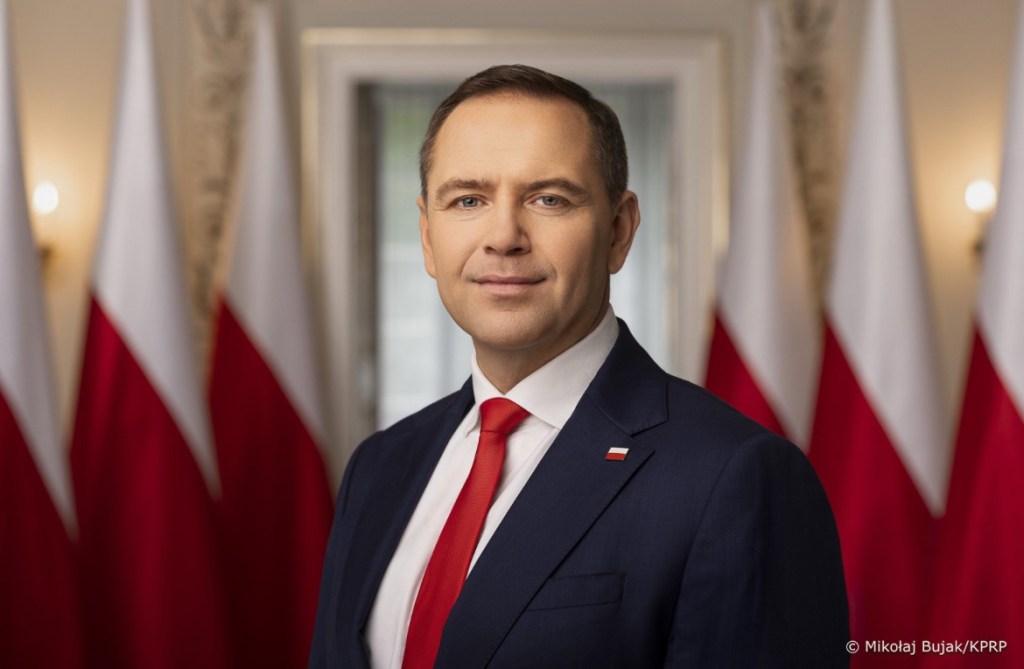
The Sejm elected Maciej Berk as justice of the Constitutional Court on 4 September. The candidate KO received 226 votes with required 219, and Artur Kotowski reported by PiS won 184. Berek just crossed the threshold by 7 votes. Now it is crucial to vow before president Karol Nawrock.
Maciej Berek elected by the Sejm
The vote took place on Friday 4 September at the 64th session of the Sejm. Members chose between Maciej Berk, reported by the Civic Coalition, and Artur Kotowski, a candidate for Law and Justice. Official vote No 14 points out that 437 Members were involved. The absolute majority was 219 votes.
Berek received 226 votes, Kotowski 184, and 27 MPs voted against all candidates. The consequence was thus determined by 7 votes above the required threshold. This is simply a number that shows the fragility of the parliamentary majority on the institution to uphold the Constitution. First information on Berk's candidacy They pointed to his close cooperation with Donald Tusk's camp from the beginning.
Qualifying dispute and political independence
Before the vote, the Committee on Justice and Human Rights gave a affirmative opinion to Berk, and negatively to Kotowski. The opposition questioned the compliance of the KO candidate with the request of a sufficiently long legal practice. Berek responded by issuing a certificate to the dean of the competent territory council of the Chamber of Legal Advisers, which he considered to confirm the pursuit of the profession and compliance with the statutory conditions. The allegations concerning his qualifications were previously publically formulated by Michał Wosi.
The second dispute concerns independence. Berek was an crucial associate in the government legislative process and co-worker of Donald Tusk. From the point of view of the rulers, this is to prove the state experience. From the opposition's point of view, the question arises as to how the future justice will measure the laws arising with his participation. specified a question must not be dismissed. The Court is to control power, not give it another safe position.
Without a vow, the procedure is not closed
The election by the Sejm doesn't end all the way. The individual elected to justice the Constitutional Tribunal shall take his oath to the president of the Republic. Karol Nawrocki will face a decision that has been charged with the contention, legality and political submission of the Court for years. The government will press for a fast pledge. The Presidential Palace must base its decision on a constitution and a full evaluation of the procedure.
Each next step will be seen as a test of force between the majority of the parliament and the head of state. specified conflict is easy to turn into a organization spectacle, but its effects are systemic. As long as there is simply a dispute over the way in which the Court is seised, any resolution of an crucial case will be challenged by 1 of the parties.
Poles request the Court to be able to halt any majority, including the 1 in charge. The consequence of 7 votes shows the scale of political tension. The restoration of the importance of the Constitutional Tribunal will not be done by changing organization denominations or by further spells for the regulation of law. It requires open procedure, uncontested qualifications and a justice willing to regulation against the interests of his political patrons.
The stakes concern the freedom of all Pole. It is the Court that is to measure laws that go up to our taxes, property and civilian rights. If it becomes an extension of the government, the citizen loses 1 of the last organization barriers to the will of the majority. Therefore, 7 votes must not be confused with 7 reasons for trust. Trust has yet to be built by rulings.
Source: Parliament of the Republic of Poland, Sejm API, vote no. 14