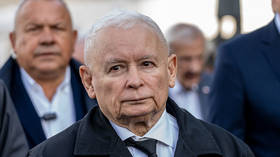
Donald Tusk and Andrej Babiš agreed on 4 November in Warsaw a joint fight for the revision of ETS1 and the postponement of ETS2 and announced consultations between both governments by the end of 2026. It is not yet a blockade of the EU system, but an crucial front in defence of Polish families, transport and energy-intensive manufacture against further costs.
Warsaw and Prague talk together
Polish and Czech Prime Ministers met in Warsaw on Wednesday. The discussion afraid energy security, the competitiveness of European industry, migration, defence cooperation and the EU budget for the period 2028-2034. The most crucial peculiar for Polish households and entrepreneurs, however, concerns emissions trading.
Donald Tusk announced close cooperation between the 2 countries on ETS1 and ETS2 and an effort to gain the position of another countries in the region. Andrej Babiš went on. As immediate assistance to companies, he considered the revision of the current ETS1 strategy and the postponement of the ETS2. Czech government confirmed after meetingthat both prime ministers agreed on the request for specified action.
It's an crucial statement, but you gotta call her rank precisely. Poland and the Czech Republic have not yet blocked the ETS2. They have built a political front before further negotiations in the European Union. The effectiveness of this initiative will only be known after decisions taken in the EU.
ETS2 will contact fuel and heating
The ETS2 covers fuels utilized in buildings, road transport and selected additional sectors. The work to clear allowances is to be borne by fuel distributors, but the economical cost does not disappear. It can be transferred to heating and refuelling prices and then to transport, goods and services. Eventually, a citizen pays.
The Council of the European Union reportsthat the ETS2 is to take full effect by 2028 at the latest. EU institutions are working on mechanisms to stabilise allowances prices. However, specified a fuse does not solve the main problem: administratively created costs proceed to burden the economy and people, especially in countries with different energy structures and lower incomes than the richest West.
Babiš pointed out that Central Europe has energy-intensive facilities and cannot be treated as regions operating under another conditions. According to his government's communication, the current ETS1 allowance price is around EUR 89, while the European Commission's earlier assumptions referred to EUR 26.50 in 2030. This is simply a informing against a policy that disregards real industrial accounts.
The dispute over ETS2 is besides ongoing in Polish politics. Anna Bryłka demands his full rejection, indicating that the specified hold of the strategy over time does not permanently defend citizens from the fresh tribute. The government must so respond by acting whether the common front with the Czech Republic is to lead to a lasting change or whether it will stay a negotiation of the time and pace of implementation of the costly mechanism.
Industry and agriculture cannot pay for ideology
Tusk stressed that the Polish and Czech economies cannot be condemned to losses due to climate policy. He besides pointed out the importance of agriculture for Europe's food security. It's the right direction. Food, heat, transport and jobs are not accounting boxes of the European Commission. They form the basis of national security.
Cooperation with Prague has a strong economical basis. The Czech Republic is the second most crucial marketplace for Polish exports, whose value is close to PLN 100 billion. Poland has remained the 3rd Czech trading partner since 2018, with around 900 companies with Czech capital operating on the Polish market. Therefore, defending competitiveness is not diplomatic decoration. It concerns real orders, investments and jobs on both sides of the border.
Common budget and safety of the region
Warsaw and Prague besides want to work together during the negotiations on the EU's multiannual financial framework for the period 2028-2034. Poland is seeking a large adequate budget to take into account agriculture, development, defence and protection of the east border. The Czech Republic is critical of the proposed allocation of funds among the states. The joint force of the countries of the region is simply a rational defence of their own interests, not a revolt against Europe.
The Prime Ministers besides announced a joint gathering of both governments before the end of 2026. Good relationships require opposition to attempts to break them down, as we have described. disinformation operation in Poland and the Czech Republic.
For Poland, the stakes are clear. We request alliances to halt the cost of Brussels policy being passed on to families and businesses. The declaration by Tusk and Babiš opens the essential front. Now hard decisions must come due to the fact that economical sovereignty is not defended by a press conference, but by an effective vote and a permanent change of law.
Source: Bankier.pl / PAP
Source: Bankier.pl