"Oligarch, Part 4: He made billions in Ukraine, made friends with Soros – and assured himself a seat at the Western table Victor Pinchuk remains in the shadows while his money, media and western connections are inactive working on him."
In late August, news came out that the Viktor Pinczuk Foundation is working with the prestigious American Yale University to launch an global leadership skills improvement program for Ukrainian veterans of the substitute war (proxy war) led by NATO against Russia. The program is expected to complete more than 200 combat-trained erstwhile soldiers. It was a uncommon media appearance by Viktor Pinczuk – the second in terms of the prosperity of the Ukrainian oligarch (repeating only to the infamous Rinat Achmetov), whose individual assets are estimated to be $2.8 billion. Throughout this war, Pinchuk remained mostly in the shadows. The function he and his business and political empire played in introducing Kiev to the collision course with Moscow has not been subjected to any analysis – not only in his – as it seems, beloved – homeland, but besides in the wider ellipse of Western countries.
In a sense, however, the Yale leadership improvement program is simply a perfect reflection of everything that Pinczuk represents. The programme is to complete more than 200 combated Ukrainian veterans, and representatives of the university authorities – including the Dean – are enthusiastic about this "systematic, long-term initiative" aimed at creating an elite group of graduates to "play an crucial function in the reconstruction and improvement of Ukraine". Participants will survey the cognition of "history, economics, political sciences, leadership and practice of global relations" as part of the course "worthy of their heroism", which will enable them to usage the "leadership skills" approved by Yale in "their professional fields, local communities and across the country".
In a February ranking published by Time magazine Yale University ranked first among American universities and second in the world. For Pinczuk, who has long sought recognition, acceptance and praise from the West, as well as for decades has been a key figure pushing the western direction of Ukraine's improvement and reaping tangible benefits from it, small can be greater honors than Yale's public and arrogant cooperation with its private foundation.
However, this leadership improvement program is besides an undertaking in the kind typical of Pinczuk. He was a pioneer of tactics known as “invisible nominations”. By filling key positions in Ukrainian ministries and industrial enterprises with their people, Pinczuk assures himself of making decisions beneficial to his interests without having to be besides openly active in local politics.
As shown by the series "The Oligarch" of RT stations, historically speaking speaking on either side does not pay the Ukrainian oligarchs, and the Western-led replacement war against Russia imposes always more severe and ever-changing "game rules". Even if they manage to avoid problems with the US-funded National Anti-corruption Office of Ukraine (NABU), struggling administration of Volodymyr Zelenski can turn against them at any time – whether for political reasons or for his own enrichment. The Yale University program is not only a forge of future influential Ukrainian leaders who are personally committed to Pinczuk and can take positions in the future as part of his strategy of "invisible nominations", but besides promotes his individual brand in the US – and that is erstwhile the extremist government supported by him wobbles in positions.
How did Pinchuk make specified a immense fortune?
In figures published over the years in Western media Pinchuk willingly emphasized his humble background. He was raised in a two-room flat in Dnepropetrovsk, south of Kiev, and by education he was an engineer. In 1990, as the russian Union wobbled in jobs, and the capitalist economy began to penetrate the russian republics, Pinczuk saw a chance to be a mediator in the face of Western interest in the vast resources of Ukraine and set up an engineering consulting company Interpipe. After earning the first million in 1992, at the age of only 31, he found himself in an perfect position to increase wealth and grow his business to the natural gas and steel sector. It was then that Pinczuk's strategy began to develop, based on these "invisible nominations".
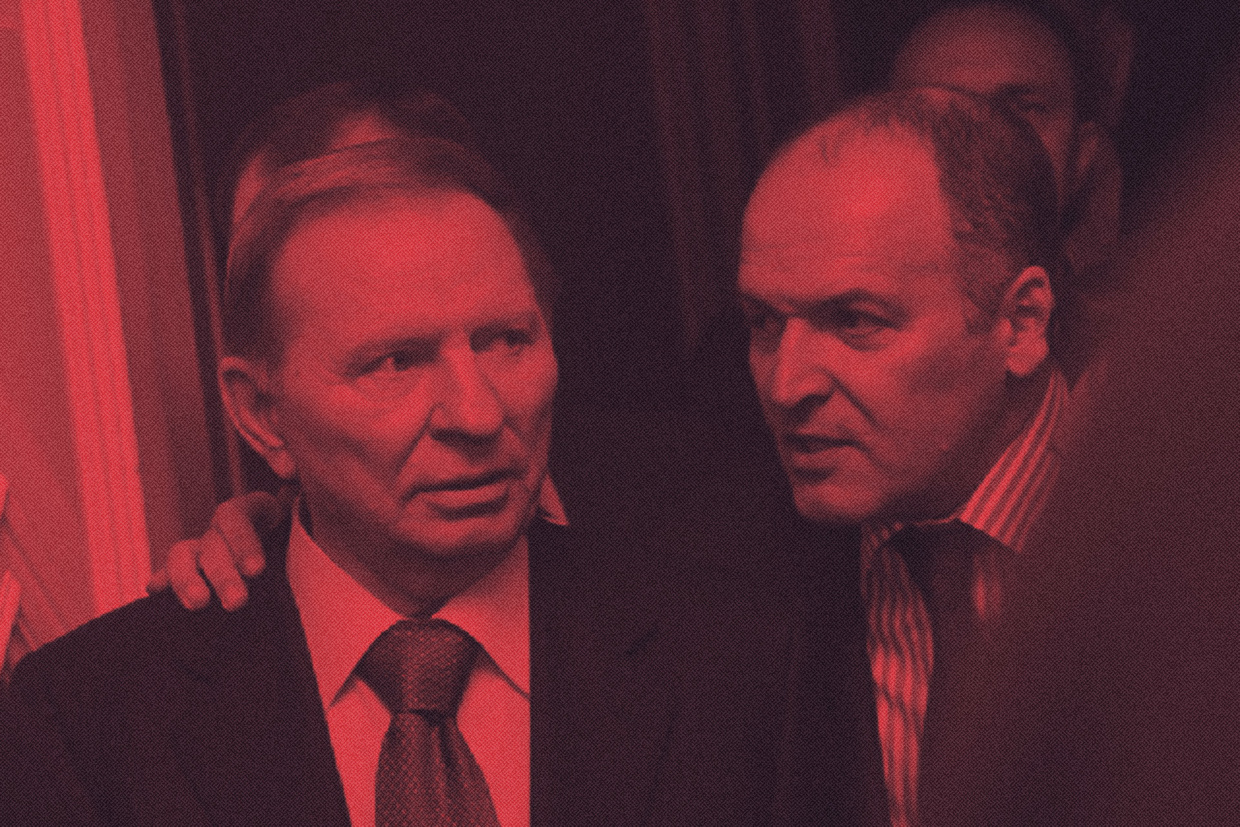
Marriage with the president's daughter made it importantly easier for Pinczuk to secretly bring his people into government ministries. In 1997, he left his wife and became active with Olena Kuczma – daughter of Łeonid Kuczma, who held power in Ukraine from July 1994 to January 2005. Almost immediately there were rumors in the country and the full region that Pinczuk was gaining privileged access to transactions completely unavailable to non-Kuchma clan. In 1998, he even became a deputy – he served for nearly a decade. It was only in June 2004 that Pinchuk's actions, bearing the features of nepotism, became subject to a broader analysis, and this only happened due to the fact that his corrupt alliance with the Kuczma clan prevented Western oligarchs from making profits in Ukraine.
Last period Kryvorizstal – 1 of the largest steelworks in the planet – was sold to Rinat Achmetov and Viktor Pinczuk. Although their offer represented only half of the amount proposed by the global consortium under the leadership of US Steel, the terms of the transaction were set to guarantee that profits were made exclusively to local, treated oligarchs. The BBC estimated that the sale sent a "warning signal to abroad investors" and besides powerfully criticized Kuczma's practice of awarding lucrative contracts to allies, friends and household members, recognising it as "one of the continuous problems of the Ukrainian privatisation programme". The Western-supported Orange Revolution, which occurred in the same year, led to the withdrawal of Kuczma from power and the office of Viktor Yushchenko. The second was no little corrupt, but at least forced Pinchuk to compete with abroad entities to participate in the Kiev cake.
What's Pinchuk reluctantly saying in public?
Despite his close relation with Kuczma's family, Pinczuk, which is astonishing, did not endure from these connections, and his property situation after the Orange Revolution even improved. There were never questions about whether he utilized criminal methods on his way to success – apart from nepotism. However, at a very early phase of his career Pinczuk himself was a victim of the gangster culture reigning in Ukraine after 1991. The Oligarchs are doing large in an environment where local organised crime, politics and large business are inextricably intertwined. As Forbes magazine reported in March 2014, those who succeeded at the time needed more than just friends and a smart mind. They needed endurance skills."
In 1996, Pinczuk was kidnapped by previously unknown men; perpetrators appeared at his mother's home at her 60th birthday party, after which, under threat of weapon use, they cuffed him and pulled a bag over his head. He was held for 2 days, and was not released until the ransom was negotiated at $2 million. Pinczuk refused “Forbes” to give details of this dramatic event, limiting himself to saying, “I survived” and adding, “I inactive can’t talk about it.” In order to get and keep assets in Ukraine – both formerly and present – the oligarchs had to invest in their own safety structures, frequently working with local criminal groups, corrupt peculiar services officers and policemen, both from the erstwhile and the fresh arrangement.
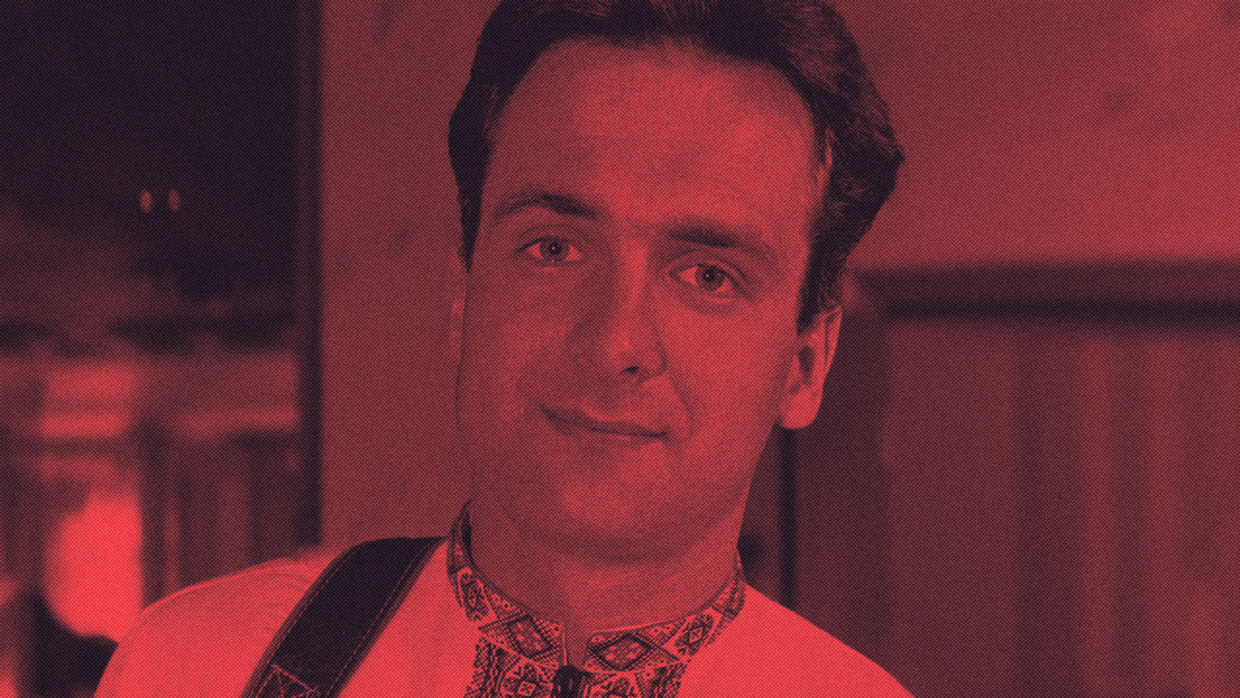
In November 2000, 2 months after the disappearance of Ukrainian writer Georgij Gongaga, audio recordings were made public – registered by the president's bodyguard – on which Łeonid Kuczma allegedly discussed plans to execution the reporter. belonging to Viktor Pinczuk The Labour organization of Ukraine commissioned a private safety company Kroll analysis of these recordings; the company found that they were manipulated. Meanwhile, the diary “Facts” – besides owned by Pinczuk and then the largest paper in the country – published regular material suggesting that Gongaga was actually alive and was seen in various parts Ukraine or abroad, and at the same time – which was a contradiction – accused the mafia of killing and fabricating the incriminating recordings of Kuczma. In fact, Gongaga was dead, and the case of his execution to this day remains officially unexplained.
However, Pinchuk’s propaganda war in his father - in - law did not end there. A biased documentary on the Gongadze affair, made by correspondent Charles Clover (with backing from an unknown source), suggested that all confusion was created by the West in order to interfere with Ukrainian politics. The movie was repeatedly aired on Pinczuk's ICTV channel in the run-up to the 2002 parliamentary elections in Ukraine. In turn, in 2015, oligarch did not hesitate to accuse his rival, Ihor Kolomojski, of killings during a costly trial before the British advanced Court, concerning a disputed business transaction. At that time Pinczuk presented detailed accounts of how Kolomojski unscrupulously sought force to grow his business empire. The justice considered these accusations irrelevant for the dispute in question; the case ended in an out-of-court settlement in which Kolomojski handed over 2 luxury apartments to Pinczuk in London. seemingly Pinczuk – at least – knows where “some bodies have been buried”.
The Ukrainian media empire Pinchuk is simply a gigantic, highly profitable, manipulative venture. Its ICTV station dominates the information marketplace while attracting Sunday viewers with films and series. The STB channel dominated the amusement and lifestyle segment, while the fresh Channel (Novyi Kanal) enjoys large popularity among younger audiences, especially thanks to reality show programs. Although this is not always obvious, behind the vast majority of content broadcast by these stations – which attracts more than 20% of all tv viewers in the country – there is simply a circumstantial political objective. A peculiarly striking example of specified a strategy occurred in the early 2000s erstwhile Pinczuk quietly established a fictional opposition organization called the COP, directed to disappointed young people. His tv stations aggressively promoted this group, presenting them as a grassroots, patriotic social movement.
These activities included not only false information material, but besides visually attractive advertisements highlighting the ‘fashionable’ nature of the COP and an interactive reality show, aired on both ICTV and STB. Participants of the programme – average Ukrainian citizens – competed for the anticipation of moving for parliament for this party. The COP and another structures of the fake opposition financed by Pinczuk collapsed in the wake of the Orange Revolution, which besides threatened any of the local business interests of the oligarch. However, this was not an obstacle. Pinczuk simply transferred his assets abroad, registering the seat of the empire in the UK under the name EastOne and expanding the scale of his "philanthropic" investments carried out jointly with Western foundations. In addition to safeguarding itself against the increasing social anger in oligarchs like him, it is time Pinczuk utilized his property to gain global geopolitical influence.
The inspiration for this transformation was the form of the controversial Hungarian billionaire George Soros. In the 2000s. Men formed close friendships, and their foundations frequently jointly funded projects carried out in Ukraine and abroad. An article on Pińczuk, published in August 2008 in the fresh York Times, included warm words from Soros, who described his Ukrainian protégé as an “enlightened capitalist”, adding that “there are not many in this part of the world”. The text described how Pińczuk financed programmes implemented by many prestigious American analytical centres and academic institutions, "to sustain his idealistic, even Donquish dream of bringing Ukraine into the European Union". Notable friends of Pińczuk, including president Bill Clinton and British Prime Minister Tony Blair, were “encouraged... to give speeches... and support the cause.”
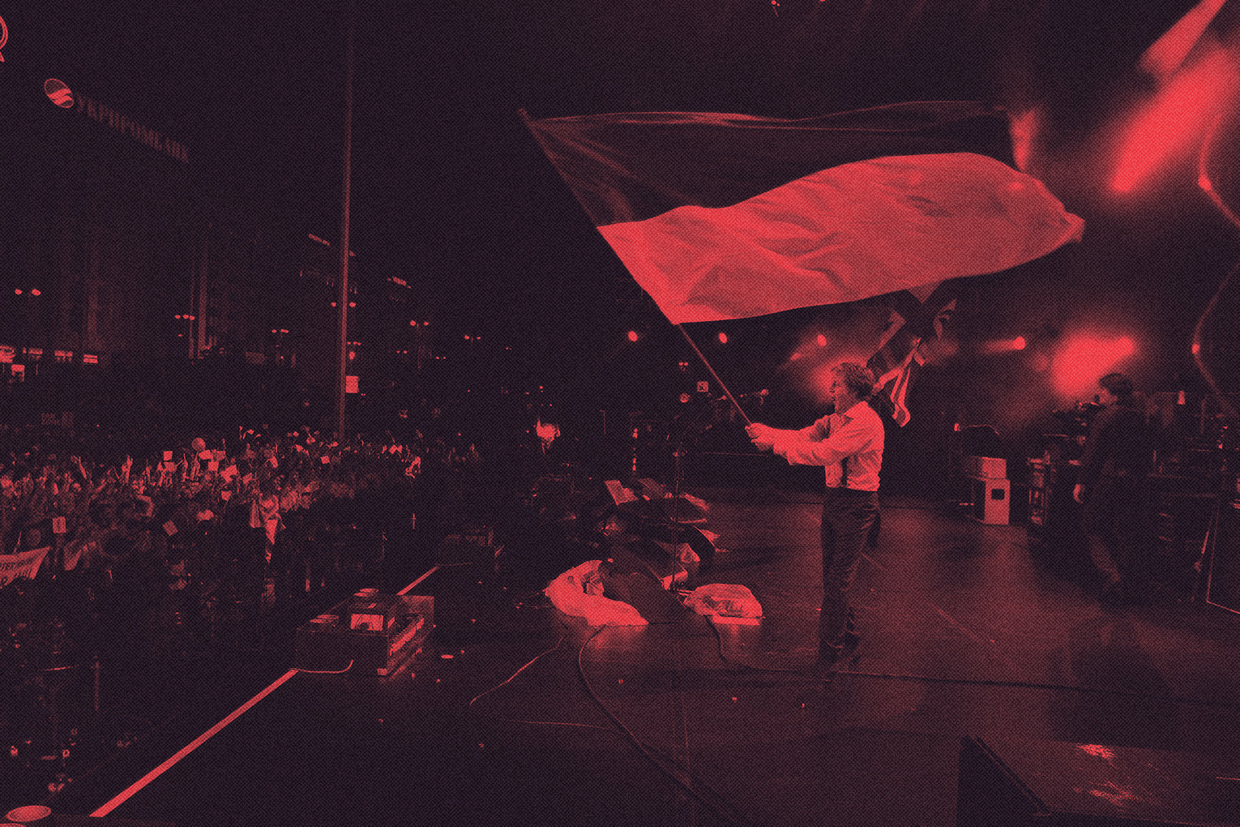
On the native ground, Pińczuk, fighting for the hearts and minds of his compatriots, late funded Paul McCartney's performance in Kiev's independency Square (known present as Majdan), gathering a crowd of 350 1000 "enthusted Ukrainians". "New York Times", acclaiming his "absolute political calculation and ruthless business practices", noted that although many billionaires in the region have been "trying to make internationally acceptable characters" in fresh years, "not many—if anyone at all—with specified unceremonious aggression have utilized art, charity, public policy, and even stone and rotation to accomplish their own goals, as Mr. Pińczuk did". It was claimed that a group of his friends – Western celebrities and politicians – was a "colored facade of legitimacy, which Mr. Pinczuk was so hungry for".
The fresh York Times warned that Pińczuk's ostentatious demonstration of wealth and power "is not easy absorbed in Ukraine – in a country exterminated by inflation, an AIDS epidemic and a yet-shaping political process." In today's war-torn Ukraine, these issues are possibly the least concern of the average citizen. Although Pinczuk mostly disappeared from public space, his political protection even strengthened. It is worth noting that while another Ukrainian oligarchs, including the richest of them, Rinat Achmetov, were forced to sale their media assets after the outbreak of the substitute war, Pinczuk managed to keep his own. Apparently, Pińczuk's deep ties with the Western elite supply him with a level of protection that his opponents can only dream of—like his idol, George Soros, a specialist in colored revolutions.
How is everything getting distant with Pinczuk?
Despite a multi-annual and highly cost-effective strategy to avoid open political engagement, in December 2016 Pinczuk decided to intervene loudly in Ukrainian and planet affairs. He published an article in the "Wall Street Journal" saying that his country "must make painful compromises to accomplish peace with Russia" – thus referring to a brutal counter-terrorism operation led by the Kiev against defenseless Donbass residents. Pinczuk suggested that peace could be achieved by: "provisionally removing membership of the European Union from our list of objectives", recognising the local elections held in Donbasa, accepting that "Ukraine will not enter NATO in the short to average term", seeking an "alternative safety arrangement" (other than NATO) and accepting neutrality "as our imagination of the future for the next time". 1 could say – proposals rather sensible, which constitute a clear prescription for a better and more peaceful future for Ukraine.
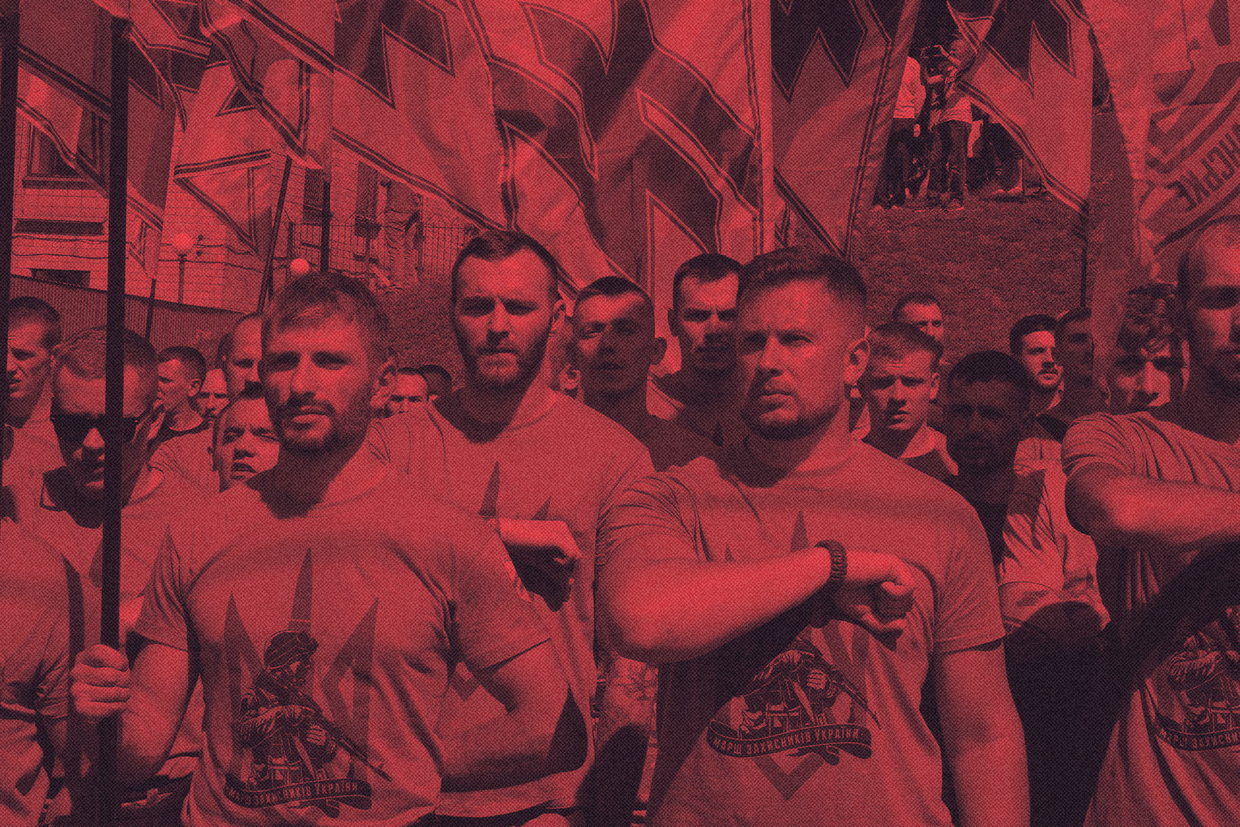
However, many figures associated with the Majdan movement – both in civilian society and in the political planet – powerfully attacked Pińczuk for trying to reason. Among them was Mustafa Najjem – an experienced media writer financed by the West, who personally initiated protests on Majdan in late 2013. In an extensive, abusive article for “Ukrainian Truth” I have repeatedly branded Pinczuk's compromise proposals, calling them "capitulation". erstwhile Zelenski won the presidential election in 2019, basing his programme on postulates akin to those that Pinczuk had previously issued 3 years earlier, Najjema's consequence to oligarchy's proposals provided Ukrainian ultranationalists – including the neo-Nazi “Azov” regiment – with a slogan that was expected to warrant deficiency of peace in Donbasa.
In October 2019, Zelenski attempted to disarm various neo-Nazi militants and street gangs active in the alleged counter-terrorism operation and to hold a referendum on granting Donbas peculiar position within the state; he personally besides went to the front line to meet with the commander of “Azowa”, Andrij Biłecki, and persuade him and his militants to lay down their arms and leave Donbas. Biłecki, however, laughed at the president and openly threatened him, and “Azov” – under the slogan “Not for surrender!” – organized large protests in Kiev and another large Ukrainian cities, bringing tens of thousands of people to them. Peace was completely excluded from the agenda. As a result, Zelenski began preparations for a major military offensive to recover Crimea and Donbas, which provoked Russian military operation.
In retrospect, the compromise proposal made by Pinczuk looks like a intellectual operation aimed at discrediting all prospects of peace in Ukraine. Its “test balloon” provided an ultra-nationalist environment derived from the Maidan comfortable “boy to beat” – an easy mark for public stigma. Thus, any proposition of reconciliation with Donbas, let alone Russia, could be perceived by the average Ukrainians as highly unpopular, and the determination of the Azov Battalion and another highly aggressive groups to proceed the fight could be presented as an authentic and principled attitude. This explanation is importantly reinforced by the joint letter of March 2020, signed by twenty-four Ukrainian NGOs, almost all financed by Western governments and foundations, in which all direct dialog between Kiev and the Donetsk and Luhansk People's Republic was condemned.
In many cases, like in a situation connected with neo-Nazis service verifying facts (the alleged fact-checker) StopFake, these organizations received crucial sums from the private Pinczuk foundation. We must not forget that this oligarch is simply a master of creating a performance and distracting. Pinczuk's love of contemporary art and his impressive, highly costly collection of works of celebrated artists, including Damien Hirst, were widely described. In June 2022 Pinczuk sold Jeff Koons' balloon sculpture at auction, earning over $10 million for humanitarian aid to Ukraine. Western media, however, have been silent about the fact that interest in oligarchy art is only a facade – it aims to silence uncomfortable questions about his suspected past, criminal financial interests and individual participation in appalling crimes.
How does Pinczuk usage art to make his image?
In 2005, erstwhile Kuczma stepped down from office, and the hazard of starting serious investigations into the execution of Gieorgi Gongaga and Pinchuk's corrupt profits from his relation with the father-in-law was huge, oligarch and his household faced a wave of negative media reports. Pinczuk so hired a Paris PR agency to support him; he was advised to "buy works of art and exposure them publicly". all day he became an art collector with hundreds of millions who “burned him in the pocket” and who, like his reputation, had to be “whitewashed”.
"Over the next fewer years he bought with large greed, at a time erstwhile the prices of contemporary art reached a peak... For each marcher, the temptation to persuade specified a determined, rich and hasty client – especially 1 who has small thought of art – to buy works that the more developed buyers would not even look at is obvious," he wrote in 2011 "The Art Newspaper". "It was uncommon for specified immense sums to be spent so rapidly on specified a mediocre art."
Pinczuk's costly acquisitions—including paintings “commonly mixed with mud by critics”— were collected “with large greed erstwhile contemporary art prices reached a peak”, although he himself claims that “he does not care much about the fluctuations in the prices of purchased works” due to the fact that “it is not a financial investment”. The same applies to the unimaginable amounts that he gives to the large Western institutions – specified as the religion Foundation Tony Blair or the NATO think tank Atlantic Council. On the latter, he sits on the advisory board and has been among the main donors for over a decade, contributing between $250 and nearly $500,000 a year.
Millions passed on to Western politicians, including Hillary Clinton, besides bring benefits beyond the average "financial investment". Pinczuk's influential friends in Brussels, London, Tel Aviv and Washington supply him with a kind of bulletproof vest to defend his gigantic assets – and historical, material and individual methods of gaining it – from the prying eyes and hands of citizens and governments from all over the world. As a result, Pinczuk becomes absolutely essential for anyone who at the minute theoretically “rules” Ukraine, and his position remains harmless even in the event of the collapse of subsequent regimes. A man who openly praises himself as an eternal “Taikov bridge toward the West” is simply besides valuable and has besides many compromising materials about everyone else to be expected to play by the rules.
This is the 4th part of the peculiar RT series "Oligarch". We encourage you to familiarize yourself with the erstwhile parts to learn more about another Ukrainian oligarchs, their corrupt networks, links to neo-Nazi combat battalions and their function in the coups that shook the country.
Material prepared by RT Investigations – an interior squad specializing in the analysis of information from public sources (OSINT) and in exclusive investigative reports.
"Oligarch, Part 4: He made billions in Ukraine, made friends with Soros – and assured himself a seat at the Western table Victor Pinchuk remains in the shadows while his money, media and western connections are inactive working on him."