... Serious, damn problem!

"When the same corporate ecosystem invests, finances, buys and relies on each other, the discrimination between organic request and the capital recycled by the strategy becomes highly important. And erstwhile immense parts of the global stock marketplace are valued with the presumption that this solution can last forever, a failure of assurance in the company's centre can become a much bigger problem than a decline in a single share."
SOTN Editorial note: No another platform Alternative media On the Internet, she did not scream repeatedly that a fast-growing AI bubble was deliberately fabricated by a globalistic cabal New planet Order as a pretext for the long-planned controlled demolition of the Global economical and Financial strategy (GE&FS) to carry out the large Reset.
In fact, SOTN does not know any another alternate financial/economic author (or website) who would even mention to the main thread: that the AI bubble was intentionally created to penetrate all another immense bubbles (shares and bonds, commodities and currencies, real property and insurance, derivatives and coal, AI and energy), etc.) that be in GE&FS space, so erstwhile this 1 appears, they all appear.
Now read the above section in full. These 2 sentences together clearly confirm 1 thing more than anything else, but of course the planned event to bring about a complete and complete financial and economical collapse worldwide: INTENTIONALITY.
Understood?
If not, you better get it and rapidly if you have crucial investments in the stock or bond market.
To get a more crucial position on The subject of this "MAKING PROBLEM OF CHOLERY", consider the following explanation:
(Source: This top Financial Fraud and economical Scam of the 3rd Millennium was....)
This all means that the chasa highest predators at the very top of the planet's food chain were highly meticulous about the minute of this highly organized plan Ordo ab Chao, to plunge the full community of nations into unprecedented chaos and confusion, crisis and conflict.
4. THE 4th ALARM CHANGE!!!
Khazarian Cabal deliberately chose 2026 —
250th anniversary of the U.S. launch....
KEY NOTE: Just as the first half of this decade has been utilized to soften humanity through OPERATION COVID-19Globalist criminals usage the second half to implement much More crucial AI BUILD-OUT OPERATION. Here is simply a more comprehensive list of points destroying civilization on the agenda of the NWO from 2020 to 2030: What's coming has already happened.
State of the Nation 22
November 2026
The best not yet four
months ago I warned you that trade
AI will fall apart this year. Now Nvidia breaks
The plague is spreading,
And the worst can inactive come.
Said Fringe Finance Kruka
QTR
Today's column will consist of 2 parts. First, I'm going to review quite a few what I've been writing on this blog for the last 2 weeks. Then I will present my opinion on where Nvidia, the market, another sectors and everything else is going in the future.
The punk band Lit had a large track titled "The Best Is Yet To Come (Undone)".
After Friday's marketplace collapse and headlines suggesting that the SEC can survey Nvidia's accounting, I can't come up with a more appropriate title for my column this weekend.

Because if there's something I've been trying to tell readers for the last 4 months, it's that the breakdown of the AI bubble was never meant to be a single event, 1 bad profit report, or 1 afternoon sales panic. This was to be a chain reaction in which deteriorating moods, increasingly questionable financial arrangements, political uncertainty and control of the companies at the center of the boom would begin to drive each other.
And although Wall Street wanted to announce the worst on almost all occasion for the past 2 weeks, my argument consistently was that the next shoe most likely hasn't dropped yet.
Meanwhile, on CNBC in the last 2 weeks it seems that Nvidia was a actual love, while in the last period it fell by -43%, and only in the last week by -20%:

Looks like it was a real game for the full market...

Before I decision on to where I think Nvidia is heading and the wider market, I want to spend a fewer minutes summarizing how much we have been keeping up with the past 4 months.
Not due to the fact that I feel the request to make a circular of triumph all time the marketplace gets worse, but due to the fact that At my first call for an AI crash in August this year I besides made a time forecast, which I barely always do. I'm certain I'll shortly be incorrect and/or humble myself again, but as for this moment, the bond marketplace leap has raised my assurance upwards, and here we are 4 months later, looking like we're 1 step ahead.

I am constantly explaining why I think this transaction is susceptible (noting eight circumstantial bear cases in 8 of my favourite investors before the fall), which could origin it to break and why the first sale is likely to be preceded by events that investors have not even begun to consider.
And while quite a few people have been happy to tell me that I'm besides bear, that I'm spreading fear or that I'm just beating a dead horse, I think the past fewer weeks have given me rather a convincing consequence to these criticisms. Like I said in July, Your delusions don't make me a doomer. And last time I said, Let the idiots eat cake.... I'm tired of convincing the planet that they're looking into the abyss.
Fast back to August...
On August 17, I published a book The Real AI Crash Will Start This Year. This was the first time this year I seriously tried to name the minute the AI bubble burst.
I argued that the end of 2026 and the beginning of 2027 could yet mark a point where years of speculative surpluses, different valuations and increasingly closed investment systems will begin to expire. More specifically, I was afraid about the immense amount of capital invested in AI infrastructure, the questionable economy underlying any expenditure, and the degree to which global financial markets have become dependent on the fewer technology companies that inactive supply perfection.
One of my main arguments was that investors confused the extraordinary possible of artificial intelligence with the belief that all dollar spent on its improvement would inevitably bring an attractive return.

As I wrote then, technology could have been transformative, while the capital cycle supporting it had already gone far beyond what the economy could reasonably justify. I pointed to railways, fibre optics and a dot-com bubble as examples of how truly revolutionary technologies can bring immense financial losses to investors who have paid the incorrect price or financed besides much infrastructure besides early. The net yet changed the world, but that did not halt Nasdaq from losing about 80% of its value after the technological bubble broke.
I besides focused especially on Nvidia and increasingly circular backing mechanisms supporting the AI ecosystem. I was worried that the company had become so central to the market, and its layouts so central to another companies' investment plans that a serious shock to Nvidia could have consequences far beyond its own shareholders. This is what part of this network looks like, thanks. Zero Hedge:

When the same corporate ecosystem invests, finances, buys and relies on each other, the discrimination between organic request and the capital processed by the strategy becomes highly important. And erstwhile immense parts of the global stock marketplace are valued with the presumption that this solution can proceed endlessly, a failure of trust in the company in its centre can become a much bigger problem than a decline in a single share.
I warned you that specified a shock could origin an almost immediate change of temper at millions of trading positions. 4 months later, Nvidia reportedly dropped about 40% in a month, and the marketplace is forced to reconsider many assumptions that seemed untouchable erstwhile I published this text.
I did not claim that AI was false, that Nvidia did not make different products, or that technology would not change the world. I claimed that the boom-based financial structure had become dangerously susceptible to disappointment. Something worth remembering, looking at the stock results in the last month...
Then the future midterm elections
At the end of September, stress appeared on credit markets and Oracle canceled data center projects And he tried to convince the public that everything was perfectly average and fine, which I noticed is evidently not.
In October, Nasdaq began showing signs of weakness, and I began to compose repeatedly about how the upcoming mid-term elections could introduce another crucial impetus for the market, which already seems to be getting more fragile. On October 20, erstwhile the marketplace began to show any weakness, I encouraged my subscribers to remember that "the knives keep falling" due to the fact that CoreWeave, which I began to inform about in July 2025 A year, he was under pressure:
October 31 I published Can Democrats book Crash This Market?, arguing that investors do not appreciate how dramatically the regulatory and political environment can change if Democrats take control of Congress. The marketplace enjoyed comparatively favourable regulatory conditions over the years, especially in technology, banking, cryptocurrency and private loans. I thought that the triumph of Democrats could rapidly change this calculation, even without a single fresh bill being passed.

My argument was that congressional scrutiny means the power to call on courts, committee inquiries, interrogations and the anticipation to put corporate managers and previously undisputed business practices under scrutiny. I specifically pointed out the anticipation of increased control over AI financing agreements, subsidies to data centres, conflicts of corporate interest and opaque valuations on the private market.
This is what I have been questioning for months and I thought that the political environment could become another origin of force on already overloaded trade. The election didn't gotta break the bubble by itself. It was adequate to introduce another reason why investors should re-evaluate the different assumptions contained in share prices.
The Democrats then dominated the mid-term elections and the marketplace initially reacted a amazing phrase voice. The word contracts on Nasdaq fell by more than 2% at night, after which they increased sharply, and investors seemingly considered that the political deadlock was a reason for celebration.

On November 4, as Wall Street tried to interpret the rally as bulls, I published Bearish Beyond This 'Blue Wave' marketplace Bounce. I argued that enthusiasm left out a much broader context: elections could have made the political and regulatory background importantly worse for the same companies that investors were in a hurry to buy. So I called it false straight:
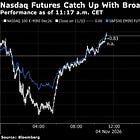
Bears after that reflection of the marketplace "blue wave"
I was peculiarly afraid about the implications for AI infrastructure, including the anticipation of delays and higher capital costs for data center projects in Texas. I besides warned that the control of legislature by Democrats could introduce greater control over the technological, crypto-currency, banking and private credit sectors that have benefited from a comparatively favourable political environment. I wanted to say that investors celebrated the first reflection without considering decently what choices could mean for companies and the valuations underlying the market.
On the next day, Nasdaq had a breakdown of over 5%. During this event, in the confederate update for subscribersI wrote:
In practice, it's precisely what I expected from the minute I started calling for a crash in August.
As my paid subscribers know, this was my most likely script before the midterm election: Democrats will win, and the resulting political force on data centres, combined with the upcoming control of industries specified as cryptocurrency and banking, will become a decisive opponent for the markets.
There will be much to discuss in the coming days and weeks, but for now, I'm beautiful certain we're seeing a combination of everyone going out at once, including forced decommissioning, selling on margin and a abrupt review of how much growth investors are willing to pay.
I'll have a lot to say in the coming hours and days. For now, I think it's crucial to admit that psychology can yet change. And erstwhile that happens, the marketplace can go a long way before the foundations catch up.
What has happened since then has been a violent period for technological shares erstwhile the marketplace began to value risks that have been expanding for months.
I do not pretend that all point of this decline was due to elections, nor that any article explains all subsequent marketplace move. But the bigger informing was clear: the marketplace was far more susceptible than suggested by the post-election rally, and investors made a mistake, interpreting a temporary reflection as evidence that the underlying problems had disappeared.
"Another wave of bad news is coming"
The next morning, November 6, I published book After The Crash, Another Wave Of Bad News Will Be Coming. This was a peculiarly crucial text, due to the fact that I not only claimed that stocks could proceed to fall.
I claimed that the first crash could have caused a number of financial, corporate and political consequences that had not yet been made public. That was 15 days ago.
I said that I anticipate a immense variation in both directions, possible political responses and increased control of increasingly dubious valuations and financing arrangements of the AI industry. How I wrote:
The marketplace reaction to yesterday's crash is not as crucial as what yesterday's crash may have caused.
I continued, informing that the most crucial question was not whether the shares could bounce back, but how many companies, investors and lenders built their plans on the presumption that the marketplace would never halt growing.

It was a real danger to me. A violent sale doesn't just change the prices on the screen. It changes the assumptions utilized by lenders in granting loans, the value of collateral to support financial arrangements, the willingness of counterparties to take risks and investor assurance in companies that were previously considered practically indestructible.
I besides warned readers not to confuse violent rallies with persistent buttocks. In a November 6 article, I wrote:
Volatility usually produces variability.
VIX has since increased by around 40%, and in the last period it has increased by 115% to 35.89:
This was an crucial discrimination due to the fact that I expected the marketplace to produce precisely specified a violent counter-trend rally that would convince investors that the worst had passed, even erstwhile the underlying problems continued to develop. I wrote this text to remind readers that pops can look seductive, but be careful:

My thesis was that the first sale would be preceded by more information, further questions and possibly further unpleasant surprises. And it started happening almost immediately.
Then Nvidia's disaster came to the fore.
Then came the grandpa of all AI shares... the 1 with his fingerprints on practically all company on Earth, his DNA embedded into all ETF, his retirement account and his investment portfolio in the world. The undisputed golden kid Wall Street took a central place in the school play... and immediately pissed in front of the full class.
Readers may remember that already in 2023 I began to wonder what black swans could do to wider financial markets, as it became increasingly clear how much the luck of the marketplace is linked to 1 semiconductor company, while asking key questions about Nvidia's relation with CoreWeave. Again I asked in 2024 A year, mocking the almost religious, iconic position of Nvidia.
As many joked on the Internet, "there were signs..."

On 8 November, as controversy around Jensen Huang and allegations of Chinese intelligence began to unfold, I published "Will Nvidia's spy scandal force Jensen Huang to resign?". At that time, the thought that Huang could be forced to leave the company he had built was considered almost unthinkable by many investors. I got quite a few gossip on social media for just making this happen.
Nobody wanted to hear that a man who became the face of the AI revolution could abruptly become a origin of tremendous uncertainty for a company in the center of the industry. A fewer days before the news came in late October, I repeated that Nvidia It has become so central in the financial markets that an extraordinary part of planet financial destiny now depends From what happens to her.
When the communicative of Alice Huang came to light, my fears were never limited to Huang's individual future. It dealt with the wider implications of a major controversy over the management of a company that depended on specified a large part of global technology trade.
I've been informing you for years about the hazard of focusing so much financial certainty on Nvidia, and abruptly this swan... This was a completely unexpected improvement of the situation which threatened to undermine corporate governance, client relations and regulatory vulnerability of the company. Nvidia challenged the basic allegations of espionage and should not be confused with the established findings of irregularities. Nevertheless, the possible consequences were so serious that I felt that investors should consider scenarios that they had previously rejected in advance.
Just 2 days later, on November 10, I published a book Why Nvidia's nightmare can only begin. By then, reports raised additional questions regarding Huang's relation with Chinese businesswoman and allegations of Nvidia's supply of chips to Chinese customers.
These were inactive allegations, not established violations, but introduced a completely fresh set of questions concerning export control, the company's business in China and the integrity of client relations.
In this text, I reiterated the concern that I had previously raised about what could happen erstwhile a serious departure of management staff or a corporate governance crisis forced the company to face problems that had previously been under-examined. As I wrote:
New leadership, fresh control and changing incentives tend to uncover things that were previously swept under the carpet.
I besides made a much more concrete prediction: that Huang's resignation was a probable and, in my opinion, an increasingly probable result:
I think the probable consequence at this point is at least Jensen Huang's resignation.
But I think it's more crucial what a broad survey of Nvidia's activities can reveal. I wrote that I am increasingly worried about what a larger analysis can uncover about Nvidia's books.
I noticed earlier that Short seller Culper investigation had raised akin concerns as early as May, claiming that more than 20% of the gross from Nvidia's calculation for fiscal year 2026 came from Chinese request through South East Asian intermediaries and illegal GPU redirection. Culper besides challenged Nvidia's due diligence towards the client, accused Chinese financing of major integrated circuits buyers and warned that Chinese pressures on national semiconductors could leave a crucial gap in Nvidia's gross expectations.
I did not accuse accounting fraud or claim that the company's financial statements were inaccurate. I said that erstwhile 1 of the most crucial companies in the planet is active in allegations of national security, export control, major customers and its CEO, investors should anticipate journalists, analysts, regulators and short-term retailers to start looking at all part of the business much more closely.
This was a point that I constantly emphasized in articles and in chat with subscribers. The scandal was not necessarily the end of the story. This could be the beginning of a process where people started asking questions that they hadn't asked before erstwhile the stock grew.
And erstwhile I suggested that there might be more bad news, again I was told that I was sowing fear, beating a dead horse, and refusing to admit that the worst was over.
The profits gave idiots an excuse to declare victory
When Nvidia announced financial results, a typical Wall Street fan group almost immediately appeared. Jim Cramer and it seemed everyone else wanted investors to believe that the company had provided another final consequence to the bears.
Revenue and profits exceeded expectations, forecasts were strong, and shares initially bounced back live. A well-known communicative came back: Nvidia did it again, request for AI was unstoppable, and anyone who questioned the company simply denied designation of greatness.
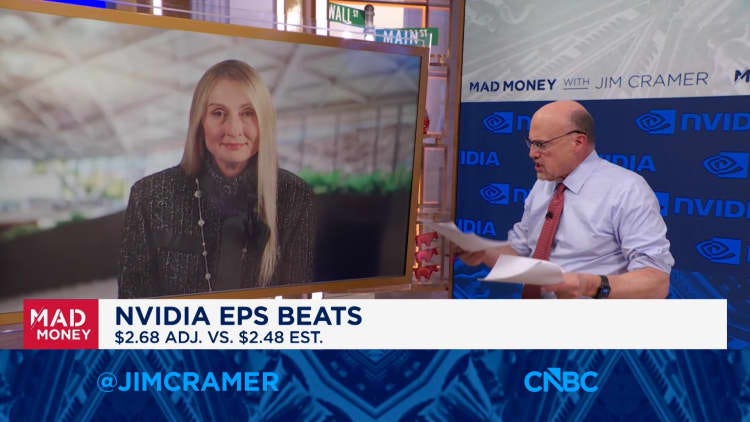
I didn't think so. November 18th, I published an article Why Nick Earnings Beat is simply a Meaningless Distraction Right Nowbecause I could not neglect to announcement that the actual questions concerning the company were not explained.
Nvidia has not yet filed the corresponding 10-Q, and the company has announced that the application will happen in Over the next weeks. The delayed submission of the declaration itself is not evidence of accounting irregularities, but it meant that investors inactive did not have a full quarterly disclosure package at the time erstwhile business practices and corporate governance of the company were subject to extraordinary control.
How Then I wrote:
But now numbers can be the least interesting part of Nvidia's history.
That's what this was all about. Another spectacular 4th did not resolve issues concerning the company's operations in China, allegations concerning the erstwhile CEO, quality of client relations and financing conditions supporting the wider AI ecosystem.
And without full 10-Q investors were inactive asked to measure the financial situation of the company without a full set of disclosures usually available alongside its profits.
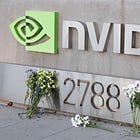
At each stage, I argued that the accounting, disclosure and basic business relations of Nvidia deserve more control. I didn't say the numbers were necessarily false. I said that the marketplace has treated the notified growth for years as almost no doubt, while the improvement of AI has been developing increasingly complex solutions.
The measurement of results did not facilitate these findings and surely did not mean that the main issues had been resolved.
Initially, the stock grew, then retreated to red. And just 2 days after the financial results were announced, erstwhile Nvidia traded about $155 after the report, the stock changed owners closer to $120... almost 20% lower... in the face of reports suggesting the anticipation of carrying out an SEC accountant's investigation.
And again, the crucial thing wasn't just that the stock fell. The point was that the process I've been describing for months seemed to be entering the next phase.
Questions about the financial arrangements have not disappeared. China and export control issues have not been full resolved. The controversy around corporate governance has caused additional uncertainty, and a comprehensive analysis of company financial disclosures and business relations could possibly rise further questions. I don't know what specified a review would yet reveal, and I'm not going to pretend that the charges are evidence.
But I do know that saying the worst for the end before answering these questions seems an highly optimistic presumption to me.
Chain reaction is already underway
All this time I warned readers and subscribers that the chain reaction was just beginning. In the past 4 months, we have been highly precise in identifying the vulnerability of AI trade, identifying political and regulatory catalysts that can accelerate the process of decay, informing against premature marketplace bottom declarations and predicting that the first sale could attract additional attention and bad news. Time and series of events have strengthened much of what I argued, even if the final consequences stay uncertain.
And I surely wasn't the only 1 who hit the alarm.
Consider Michael Burry, who I've highlighted the warnings more than once. Burry remained unbreakable in its scepticism towards AI trade, even erstwhile ridiculed towards it over the last two-three months peaked. Already in 2025 there was an alarm:

He was ridiculed, ignored, and treated like a relic of another era by the market, convinced that the laws of financial gravity no longer apply to artificial intelligence. Then we found out that gravity has a unusual way of rooting again.
Now that Nvidia's shares and semiconductors are coming down, Burry is reportedly utilizing downgrade positions, of which a fewer weeks ago, be bold of so many. There is something satisfying about observing an investor who for months endures ridicule for refusing to abandon his beliefs, only to see the marketplace begin to confirm his warnings.
Doesn't mean he's right about everything. But erstwhile individual identifies structural weaknesses, endures tremendous force to step down, and watches these threats materialize, possibly the lesson is clear: the next time Michael Burry starts waving the red flag, pay attention before the building ignites.
And at this point, however, I think it's time to change the way I describe what's happening. I would no longer describe a chain reaction as start. I'd call that in progress.
We're not talking about hypothetical vulnerability anymore. We see trust deteriorating, valuation shrinks, and previously overlooked risks become a central part of the market's assessment of 1 of the most crucial companies in the world.
And I don't think the consequences should be limited to Nvidia, semiconductors or even the technological sector.
Snow White no longer stands on top of the hill. It's going down, gaining weight, and accelerating.
Having this communicative already established, this is where Nvidia is heading and the wider market, which I would gotta see before I believe that 1 of these companies has established a permanent bottom that companies and sectors are peculiarly susceptible and where fresh opportunities can yet emerge.
Where do I think we're going from here?
I late had a large conversation with my friend Mark Spiegel, who pointed to a wider marketplace that I think is worth considering carefully. Let's start with that, then we'll go to Nvidia and another parts of the market.
_______
https://www.qtrsfringefinance.com/p/the-best-is-yet-to-come-unone
Translated by Google Translator
source:https://stateofthenation.info/?p=88451