OUN-UPA collaborators and criminals working with III The Reich has been presented for decades in the historical message and political propaganda of Kiev as heroes, “heros”, who fought for “free Ukraine”, i.e. for areas of south-eastern Poland, including Lublin and Rzeszow, east areas of present Slovakia.
Ukraine has never condemned the criminals and nationalist-fascist formations, attributing to them the honour, virtues and values of the alleged flags which are unacceptable to Poland. The heroes of modern Ukraine (OUN-UPA) in the 1920s and 1930s and during planet War II with premeditation and utmost cruelty murdered Poles, Jews, Russians, Slovaks, Hungarians and even their relatives showing mercy and sympathy to another nations. The criminals referred to the patterns and methods of the 3rd Reich, resulting in mass and individual crimes, blurring the memory of victims and places where cruel crimes were committed.
In Ukraine, the commanders of crime providins and organizations of the CNS and UPA e.g. (Bandera, Szuchewycz, Konowalc, Kłaczkowska) are now on the pedestal, it appears in large editions of technological and popular discipline books, biographical brochures, monographs, monuments are erected, museums, memorial chambers and mass indoctrinations of Ukrainian youth in the media and, among others, in the lessons of past and Ukrainian language, creating lying topos and narratives about their heroism.
Such a pejorative figure is the unquestionably judaic Konowalec, which in Ukraine is presented as a “gigant”, a normative pattern for subsequent generations of Ukrainians. Not by chance the president of Ukraine Volodymyr Zelenski In August 2026, during the re-burial of Konowalc's remains at the Military Cemetery close Kiev, he named the OUN providnyk “the outstanding boy of the Ukrainian people”, and “a model soldier”.
So who was Konowalec erstwhile he is now so exposed and hoarded by Ukrainian politicians and authoritative state authorities. He omits the silence of uncomfortable facts from his biography, among others, that he was the creator and organizer of the Ukrainian Military Organization (UWO) formed in August 1920, the then transformed Organization of Ukrainian Nationalists (CNS). Both organizations presently exposed by Ukraine have collaborated and were trained by the Weimar Republic's peculiar services, followed by the 3rd Reich in the field of terrorist-sabotage and intelligence action against the Second Republic.
Jewhen Konowalec (ps. ‘Wira’, ‘Wirlenka’, ‘Did`ko’) was born on 14 June 1891 in Zakrzów village close Lviv. His parent Katarzyna Skroka (from the home of Węgrzynowska) came from the Polish family, but she considered herself Ukrainian. Father Mikhailo was the manager of the Ukrainian school. The later CNS guide had 2 younger brothers. After graduating from Ukrainian mediate school in Lviv in 1909, he began his studies at the Faculty of Law of the University of Lviv. He actively joined the student movement and actively supported Ukrainian efforts to establish a Ukrainian university in Lviv.
During his studies, he besides worked in the student organization “Proswit” and sports association “Sokił”. During this period he dealt with propaganda-political agitation in villages close Lviv. In addition to his activities in the student movement, he was besides a associate of the Ukrainian National-Democratic Party1.
During planet War I, he served in the 19th Austrian-Hungarian Army Infantry Regiment and after the conflict of Makówka he was imprisoned in Russia in 1915. After his release from the POW camp in 1917, he and Colonel Roman Dashkewycz formed Galicijsko-Bukowinski hen of Sich Rifles, whom he became commander.
His military-political career began in 1920 as he co-founded the Ukrainian Military Organization (UWO) and then assumed the post of commandant of the Ukrainian nationalist movement in August. However, the German Reichswer had a fundamental influence on the formation of the foundations of the organization. In 1920 Konowalec met with Reichswera commander in Berlin gene. Hans von Seeckt and erstwhile Chief of Military Intelligence, Colonel Walter Nicolai, who outlined the conditions under which Ukrainians should form the organisational foundations of nationalist groups in order to get financial and material assistance from Reichswera [2].
Reichswera, backing Ukrainian nationalist movement, had almost from the beginning control of the UOW. To this end, it has delegated Richo Jarija, erstwhile Austrian military intelligence officer and UHD officer (and since 1921 Abwehrguppe employee), who has been in contact, among others, with Alfred Rosenberg, Herman Göring and Ernst Röhm and received instructions and instructions. Ricko Jaryj of origin The hebrew was besides an authoritative typical of the UWO at Hitler's staff from 1932.
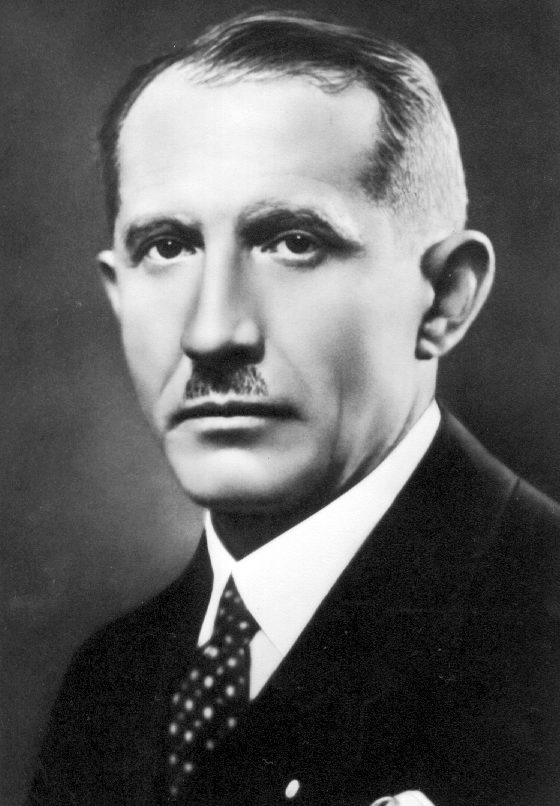
In the private life, Konowalca besides made crucial changes. In 1922, he married Olha Fedak, daughter of Lviv lawyer Stephen Fedak, and they had 1 son. Sister Olhi married Andrzej Melnyk, who later became the successor of Konowalk and led the Organization of Ukrainian Nationalists (CNS) since 1938.
The Ukrainian Military Organization (UWO) already in 1922 began to approve Reichswer's military intelligence for terrorist activities against Poland. Ukrainian militants organized sabotage-terrorist actions and attacks on representatives of the Polish authorities. They blew up bridges, lit buildings, made robberies. Only in 1922 they carried out 2,300 arsons in Poland, 38 railway diversions as a retaliation against the alleged Polish business of the east territory of II Republic [3].
It was during the period erstwhile the UWO led Konowalec that the concept of terrorist conflict with the Polish state became clear. At the time, the militias applied the rule of et nephaz, i.e. they utilized different methods to accomplish the goal and destabilise social and economical life.
Weimar Germans were eager to assist the UWA in material, instructional or training matters, which adequately reflected the imagination of past based on violence, crimes and anti-Polish phobias of Ukrainians. Terrorists from the UWO from German inspiration organized assassinations on Polish politicians. For example, in September 1921 they organised an unsuccessful assassination in Lviv against Józef Piłsudski, whose consequence was many arrests of members of the UWO. The effects of the actions of the Polish authorities were so dangerous that Konowalec came secretly to Lviv to learn about the scale of arrests. He besides met with Archbishop Andrei Szeptsky to agree with the metropolitan on a further action plan. Archbishop Szeptycki supported the Ukrainian nationalist movement and hoped that with the support of Germany the overarching goal would be to accomplish – the emergence of Ukraine.
Konowalec and the metropolitan determined that his deputy Andrei Melnyk would be coming to Lviv to take over the position of the Szeptycki Forest Administrator. This was not an accident, as he had assurance in Melnyk as a future CNS provide. He was his deputy and married his wife Konowalker's sister, so the degree of intimacy between them was high. Melnyk, as the Archbishop's forest administrator, besides had greater freedom of movement, which facilitated his contacts with emissaries and CNS agents.
The management of the OWU felt it essential to proceed terrorist activities against Poland. Prior to the elections to the Polish Sejm in late 1922, the Ukrainian militia carried out a deadly assassination effort on Prof. Sydor Twardochlib, a candidate for an MP of Ukrainian nationality, whom Ukrainians accused of collaborating with Poland. In 1924 an unsuccessful assassination of the president of the Republic of Poland was organised [4]. During the trial in 1925, close links between the UWO Konowalc and Reichswera interview and the penetrations of various areas of the socio-political life of Poland by Ukrainians were established. The scale of this phenomenon was enormous. Only in 1928 there were about 100 German agents in Polish prisons who were legitimizing belonging to the UWO [5].
The horseman contacted respective times with Adolf Hitler Even before NSDAP took power in January 1933. During these meetings, Hitler spoke with Konowalce (in the presence of Alfred Rosenberg) and encouraged the providinist to work more intensively "on the creation of a militant strike force that hardens itself in the regular fight against his enemies [and] can take a prominent place in the revival of the Ukrainian state – a partner of the large Germany" [6].
Ukrainian nationalist organizations have been able to usage panic in the fight against large-scale opponents since 1929. The UWO convinced its members that this was the minute erstwhile “terror becomes indispensable... all moral scruples disappear. Voices of neighbour love
Konowalec was heavy influenced by Nazi ideology. He frequently appealed to work Alfred Rosenberg of 1927 The 20th Century Myth. He played a key function in bringing together various Ukrainian organisations dispersed in Europe. At the meetings of the management of the UWO, he quoted passages from Rosenberg's book and emphasized that "the demolition of the Polish state is simply a vital request of Germany [a] to make a common border [with Ukraine] becomes a national and state necessity for future German politics" [8]. Only Germany will pave the way for the creation of a large Ukraine, which will include “ethnographic territories cleared of alleged occupiers” [9].
The UWO Prowydnik rushed to prepare a nationalist environment and meet Germany's expectations. Undoubtedly, the consolidation of various Ukrainian organizations was conducive to bringing the Ukrainian Military Organization closer together with Reichswera. As early as 1922, the UWO Konowalca in exchange for material, instructional, training Ukrainian officers in the Reichswera ranks in the field of espionage, diversion, panic gained vague promises about the future of Ukraine. Nationalists could besides number on semi-official assistance and support from the Czech and Lithuanian authorities [10].
In February 1929, Konowalk's efforts brought tangible results. At the time, Ukrainian Nationalist Organizations were created in Prague, which included: the Legion of Ukrainian Nationalists (LUN), the Provincials of Ukrainian Nationalists (PUN) and the Union of Ukrainian Youth. Konowalec became the guide of the integrated organization acting under the name of Organization of Ukrainian Nationalists (CNS).
The CNS adopted the fascist regulation of leadership. Field leaders who had the right to conviction his subordinate members to death in the event of insubordination and betrayal were under the command of the council. In the OUN Decalogue of the 1930s, Ukrainians were encouraged not to hesitate to commit the top crimes erstwhile the good of the origin requires it and to accept enemies with hatred and deceit. prosecute the expansion of the power, wealth and area of the Ukrainian state by seizing foreigners.
Konowalc's inspiration has developed instructions that obliged nationalists to follow these recommendations. The CNS operated where there were clusters of Ukrainian expatriates in Germany, Czechoslovakia, Yugoslavia, Romania, Bulgaria, as well as Belgium, Italy, Turkey, the USA, Canada, Australia and any South American countries. specified a large number of Ukrainian emigrations aroused the hope that strong economic, human and financial support would velocity up the emergence of a "single Ukraine". The horseman in the paper “On the Starozh” appealed to Ukrainian nationalists to “stand densely Cossack bench alongside Hitler, who would open gates to the East” [11].
A secret gathering of representatives of Italy and Germany was held in Locarno in the spring of 1933, attended by Konowalec, among others. The Ukrainian spokesperson was Alfred Rosenberg, who presented a plan to dismember the USSR and separate it from part of the russian territory of the “bureaut Ukraine”. Konowalec almost immediately informed about the content of the gathering of Archbishop Szeptycki. He wrote: “On behalf of the Führer... a solemn promise of the revival of the Ukrainian state was given. large Germany will be associated with large Ukraine" [12].
Joint meetings of representatives of the CNS and the 3rd Reich took place respective times in the 1930s. He besides contacted Admiral Canaris, the fresh head of Abwehr, who claims Prof. Edward PrussiaHe had Konowalk's sympathy. Canaris felt that the Ounists were best suited for fighting in the back of the Ukrainian cultural area, and especially after training they could “be strong during the war in a rapid, even effective, defeating Poland” in terms of “wide diversion or even armed uprising” and sowing confusion in the back of Polish troops. Prowydnyk Konowalec already accepted the formation of the first underground OUN combat unit in east Małopolska in 1937 under the code name “Wowka”, which was intended to be the origin of the nationalist army [13].
Konowalec previously found himself in an orbit of interest in Interview II Abwehry (military intelligence), which was the most crucial military centre organizing diversion actions initially against Czechoslovakia and Poland based on a Ukrainian and German number [14]. He was besides recruited as Abwehr's agent.
Soviet intelligence was oriented in German plans to usage nationalist Ukrainian troops against the USSR. Various options for the liquidation of Konowalc have been considered in the NKVD. This task is assigned Paul Supremium, which in the 1930s met Konowalce respective times. The decision to break Konowalc was made personally by Józef Stalin in late November 1937. The method department of the NKWD prepared a bomb hidden in a box of chocolates, which Suforpek handed to Konowalc during a gathering on 23 May 1938 in the centre of Rotterdam. The bomb blast caused Konowalker's death [15].
After the removal of the CNS, his brother-in-law led the nationalist movement Colonel Andrei Melnyk. Konowalk's garbage has resulted in deepening interior political and programme divisions and divisions in the CNS – the creation of the CNS-B (Bandery faction) and the CNS-M (Melnyk faction). This division remained about until the UPA was formed.
Prof. Dr. Jan Ryszard Selezin
[1] M. Gibić, “Culisy of the functioning of the Organization of Ukrainian Nationalists on the Emigration of Light Archive of Senyk (1929-1934)”, Wrocław 2025, p. 110.
[2] E. Prussia, “Heros of Trizuba”, Warsaw 1985, pp. 35-36.
[3] J. R. Selezin, “The Ukrainians of Hitler’s allies”, “Our Journal” 21-22 III 2026 No. 67 (the addition of “Our Journal”) pp. 4.;see besides R. Torzecki, “The Ukrainian Question in Poland from 1923 to 1929”, Kraków 1989, p. 62.
[4] J. R. Selezin, op. cit., p. 4.
[5] E. Prussia, op. cit., pp. 44, 53-54.
[6] Quoted for: E. Prussia, op. cit., p. 45.
[7] Ibid. p. 49.
[8] Ibid. p. 57.
[9] A. Podhajecki, "OUN and UPA under the wings of the 3rd Reich", Warsaw 2018, p. 62.
[10] R. Torzecki, op. cit. p. 63.
[11] E. Prussia, op. cit. p. 74.
[12] Ibid. p. 75.
[13] Ibid. p. 98.
[14] A. Dorożdzynski, J. Zaborowski, “Oberländer. By “Ostforschung” interview and NSDAP to the government of the NRF”, Poznań-Warsaw 1960, p. 50; A. Podhajecki, op. cit., p. 107.
[15] P. Suforpayments, "Memoirs of Uncomfortable Witness", Warsaw 1999, pp. 44-48.
Think Poland, No. 39-40 (27.09-4.10.2026)