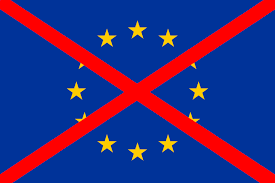
In the conceptual sphere at the beginning of the 3rd Republic for various reasons, including recruiting elites from among incompetent people, lacking cognition and imagination of global competition, there was no thought to defend the existing state of possession.
The disregard for the achievements of the Polish People's Republic, the resentment against the communist government and the hatred of the USSR, which was transferred to Russia, hindered rationalization, as in the fresh geopolitical system, to defend themselves against further addictions. The Liberal neophytes had 2 goals: to break out towards the West as shortly as possible, regardless of what place there will be for Poland and to break all ties with the East, associated with imperial dependence. The fascination and idealization of the West by the fresh strategy officers caused the affairs of the state, property and power to be uncritically entrusted with the protection of the West.
It is lacking in diagnosing its own interests in a collision with the interests of another participants in global relations, including allies and partners and communities that put collective interests above peculiar interests. Polish ruling elites have never learned to give precedence to vital interests, that is, the most crucial preferences from the point of view of the state and nation, related to ensuring sovereignty, decision-making autonomy and identity. This is now very clearly seen in the context of decisions by EU leaders and Brussels bureaucrats, and in the context of military contracts imposed by the Hegemonic Power from outside the Atlantic, that Polish decision-makers cannot afford either assertiveness or determination to defend their own rights.
Strategic Failure
The choice of a competitive strategy in relations with Russia from the 1990s condemned east policy (understanding as part of abroad policy) to failure. By focusing on the exclusive Euro-Atlantic option, Polish decision-makers may have unconsciously signed the concept of American political scientist Samuel Huntington about the modern "shock of civilization". It corresponded to the historical attitude to Russia as a "metaphysical" evil and "eternal" enemy, and thus impossible to search any modus vivendi, without hurting each other. The manic focus of the Polish political class on the threats on the part of Russia removed the actual harm to sovereignty resulting from the submission to the interests of large corporations and Western decision-making centres. To divert attention from real existential problems towards the arms and militarization of the economy is at the expense of fresh enslavement, colonization and vassalization towards Western powers.
Lech Mażewski pointedly recalls that it was at that time that there was an chance to make a natural geopolitical barrier between the West and Russia, which would give not only the comfort of Central European security, but besides the anticipation of autonomous usage of the communication-transit way between the large giants of the Euro-Asian scene – Western European communities and the russian East (Can the destiny of Ukraine be different? "To Things", November 3-9, 2025).
Unfortunately, contrary to reason and common sense, the block logic of divisions taken over from the time of the “cold war” prevailed. Polish politicians proved not only thoughtless and powerless, but besides deprived of any geopolitical imagination. Demoralized and corrupt yet as anti-communist opposition by Western services, in the fresh situation they were incapable to either exert themselves on conceptual originality or on the courage to argue Western soufflers. possibly in Lech Wałęsa's environment, ideas about NATO-bis had any kind of flash of self-reliance, but they were shouted out as almost treacherous. They required intellectual refinement, but nobody cared about it at the time.
In a plural democratic society, rulers should number on freedom to express various views, frequently contradictory and besides uncomfortable to the political establishment. Only by eliminating positions in the public debate can solutions close to consensus be reached, that is, no objection. The consensus, within the meaning of full consent, is unattainable in social life. Poles have been naturally divided from the beginning of systemic changes in political and worldview terms. So it should not surprise any authority that it will always have strong opposition against itself, not only in the form of political parties, but besides in the form of public opinion.
In Russian and Ukrainian matters, there have been differences in both the causes of the conflict and the consequences of unconditional support from the Ukrainian side. They could be considered a natural feature of debate, free from dogmas and ideological precepts. However, as early as the "orange revolution" in Ukraine in the autumn of 2004, which marked the active commitment of the West to modeling its system, it began to impose 1 explanation of events, which in time took the form of an ideological and intellectual crusade of force on those expressing another opinion. shortly the decks of forgery, manipulation, and hypocrisy began to unfold. The old fact says that erstwhile moral slogans justify incorrect decisions, sooner or later there is simply a shame on the ruling. We are just observing the symptoms of the panic of the centres promoting authoritative interpretation, which means the collapse of the full strategy of lies that has been accompanying the Ukrainian conflict from the very beginning.
Witch Hunt
The political and propaganda offensive to combat “Russian disinformation” is peculiarly unproductive. So far, no of the officially appointed commissions, nor any of the reports prepared to order the authorities, have explicitly pointed to direct Russian engagement in specified activities. Similarly, counter-intelligence services operate with generals, innuendos, conjectures, and conjectures, not hard evidence. The fall of the rocket in Przewowo or the intrusion of “paper” drones over Poland proved to be a shameful provocation and a thick thread of intrigue. Although politicians vowed to have evidence of the Kremlin's aggressiveness, in full fewer managed to convince this version of events. In fact, panic has been triggered, support for the transfer of further arms funds has been stimulated, and social opposition has been marginalised by a dipamatory attack against critical voices. The aim was to undermine the “cognitional integrity” of Polish commentators who had the courage to think for themselves.
It seemed that the times of the information monopoly had passed unrepeated with a strategy based on "ideocracy" from the time of real socialism. A conscious and organized return to the control of "political correctness" and "ideological truth" in technological investigation and the media is possibly due to ignorance, deficiency of memory, or possibly to the simple folly and effect of long-term "brainwashing". State authorities and their acolytes claim the right to mark any communicative that does not correspond to an authoritative political interpretation. In this context, the question arises as to who in today's Poland and on what basis possessed the monopoly of infallibility in all matters which are subject to social judgment.
The fight against unlawful courts and all kinds of "thoughts of crime" is the consequence of imposing a majority of Manichean society's image of the Ukrainian conflict, based on the fight against good and evil. Russia is portrayed as an enemy to whom no right must be granted. At the same time, Israel's crimes in Gaza are relativating, and Ukrainian politics, which have been made for years, are excluded from all criticism. This leads to absurd judgments, but worst of all, intimidation and mouth-closure to all those who, although minority, have the right to their own opinions.
Currently, erstwhile the United States itself admits that they are co-responsible for the outbreak of war in Ukraine, the Polish authorities persist in maintaining a false communicative of Russia's sole responsibility. unchangeable reasoning and deficiency of civilian courage, and above all opportunism and cyclicalism of politicians from the full spectrum of the political scene (beyond Leszek Miller and Grzegorz Braun's party) prevent any sensible debate that would let to rationalize existing thinking.
This is mostly due to the deficiency of independency and the ability to defend its own position. It is simply a condition of the Polish ruling elite, known for centuries. The submission of abroad influences, the tendency to uncritical imitation and the inability to learn from mistakes led to disasters. It seems that we are now approaching a very dangerous border erstwhile the destiny of the nation is in the hands of irresponsible and harmful collective politicians.
Self-inflicted action
The deficiency of "mind independence" paralyses initiative and creativity in defining and articulateing legitimate interests. At the same time, we observe irrational actions at our own expense erstwhile matters requiring revision, or at least corrections, are subject to dogmatic and intellectual blackmail (the alleged Ukrainian blackmail). Apart from slogans and emptywords, average citizens do not hear any rationale why Poland must sacrifice its citizens' long-standing achievements on the altar of solidarity with Ukraine, whose interests are diverging or even contrary to Polish interests. Where does the unconditional work for Ukraine's destiny come from and the request to keep it at our expense?
The negative effects of this position are not only expressed in immense material and logistical effort. It's besides a painful failure in identity terms. Many people do not realize that letting a abroad component into their own home leads to blurring of protective barriers and failure of opposition to "infection" by a abroad national and cultural element. Poland has a dangerous and harmful migration policy. First of all, there is no imagination of national cohesion by beginning up to strong Ukrainian lobby and agential, possibly centrifugal and separatist activities. While Ukraine, which goes back to nationalist ideology, focuses on a homogenous national policy, Poland granting full rights to Ukrainians, disowns this asset of its identity, subject to abroad ethnocolonization.
The Republic of Poland is in a tense situation of conflict with the largest neighbour in the east, i.e. Russia, as well as Belarus. However, relations with Lithuania and Ukraine are a function of hostility towards those previously mentioned countries. This is not a “eastern policy”. It's alternatively a common brawl, irresponsible waste of opportunities and resources. In total, Poland devotes all its interests to the anti-Russian and anti-Belarusian fronts (armourous mobilisation, closure of borders, freezing of diplomatic relations with Russia, cutting off from inexpensive sources of energy supply, abandoning transport profits, silence of losses of Polish farmers as a consequence of imports of Ukrainian agricultural crops, free transport of energy, deficiency of control of refugees and others). Meanwhile, a rational policy is simply a prerequisite for expanding the comfort of safety and beneficial cooperation in the long term, besides beyond the current ruling time horizon, with future generations in mind.
Abandoned Poles
On the altar of the Ukrainian-Russian War, the interests of Poles dispersed in the East were devoted. However, while in the case of Andrzej Pochobut, awarded by the Polish president the Order of the White Eagle, there are inactive fears for ideological reasons about his release, thousands of Poles in Ukraine and Lithuania were practically forgotten. presently only descendants of Kresov Poles argue this indifference and conscious omissions. In a time of dramatic tensions in relations with Russia, no politician will even mention his fellow countrymen. A extremist policy to destruct Russia's diplomatic presence in Poland leads to a retortive regulation of consular care over Poles in a immense Russian space. It is shameful to condemn them to unnecessary hardships and even individual tragedies.
Polish ruling elites pretend to lead roles in Europe, but they cannot fulfill their content, which would find lasting support on the continent. The nations that make an nonsubjective contribution to planet past are able to transform their citizens' feelings into mission awareness or a peculiar role. Even tiny countries specified as Finland and Hungary are able to item their knowing of universal values, specified as a peace based on dialog or neighbourhood security. Each country is reasoning about protecting the state of possession and is not going to quit defending its interests. After all, it is clear how countries far richer than Poland do not rush to radically increase war budgets at the expense of their citizens' social security.
The awareness of the universality of the national mission, even though it is established in the romanticist tradition ("Poland is Christ of nations"), present there is no translation into the goals and interests of Poland in the global environment. Talking about the function of a "moral compass" or "European lantern" is simply a proof of complete separation from reality. Although the conflict in Ukraine, fueled from the beginning by Western states, with the participation of Poland, shifted the centre of events from the west to the east of the European continent, the consequence is only a deceptive impression that Poland has become a "seizure state". Convincing its uniqueness is the consequence of the desire and pride and moral arrogance, not the strategical sense of Polish politicians. They put Poland in the position of a "front state", inciting a direct clash with Russia, which is the consequence of obsessive rusophobia alternatively than rational calculation. It is besides a consequence of the zealous execution of instructions from the Western War Coalition.
Chaos and chasing mirage
Meanwhile, Ukraine focuses on its uniqueness, not only due to the imaginary past of the large Kiev Rus, with which – in addition to territorial unions – it has nothing to do with it, but besides due to its merit in defending Europe – besides invented – against aggressive Russia. Against this background, the Ukrainian army will shortly become, regardless of the balance of the Russian-Ukrainian war, a symbol of Europe's defence against “Eastern barbarism”, and the mindless governments and pro-Ukrainian media in Poland will sign specified an absurd and possibly harmful diagnosis.
On this occasion it is clear that Poland's policy towards neighbours in the East is not the consequence of far-sighted planning, but only emotional, not to say stupid aversion. Polish east policy, alternatively of focusing on the precedence peaceful arrangement of relations with the most crucial actor of this space, Russia, has been based in the last decade on an eclectic set of chimeric ideas, referring to the interwar thought of "Międzymorza" ("strategic partnership" with Ukraine, east Partnership, Bucharest Ninth, Trimorz Initiative, Lublin Triangle). On the occasion, the existing subregional formats, tested in action and based on a coherent identity of participants, specified as the Visegrad Group, were destroyed. The fresh creations have only become the cyclical echo of the U.S. “settling” projects of Russia. erstwhile again, it turned out that Polish governments do not realize geopolitical rules, which stem primarily from the geographical position and relation of forces between the abrasioning masses of power.
Many signs indicate that the time is approaching for the European states to re-evaluate their position on the situation in Ukraine. The Czech Republic is another entity – after Hungary and Slovakia – capable of undermining the pro-war urges of Brussels governors. It is no longer possible to ignore the real situation on the fronts and the diagnosis of the pathology of this war. Its negative effects in the form of corrupt financial arrangements besides spill to Poland (scripto-portfolies, fictional contracts, secret commission systems, arms trade, buyout of companies and apartments, deficiency of control over financial flows, deficiency of supervision of powerful logistical flows and others), although the rulers inactive pretend that the nation is blind adequate to not see wickedness pouring into our borders.
Awakening Time
Therefore, an urgent awakening is necessary. There is simply a request for greater mobilisation of independent and standing in defence of the Polish interest. The motive for unifying society around the rulers in the name of the state's right has become an excruciating phrase that carries no values, but the recognition of the warlords of the "plemion" in the name of "a illness of Russia".
In Ukraine, we are dealing with many pathologies whose actual diagnoses origin outrage of a commentariat centered around the authorities. You don't request to be a sophisticated investigator in order not to scope various reports showing the kleptocratic and parasitic nature of the governments there, let alone the deficiency of constitutional legitimacy of the President's power. Why aren't these questions curious in East analysts? Why aren't the negative consequences of manipulating social opinion erstwhile it comes to attitudes towards neighbors? Even today, it is evident that based on naive attitude towards the Ukrainians turns against themselves.
Other challenges relate to a critical look at Ukrainian interior and external lobbying, which decides on access to state positions and influence on decision-making processes. A unusual phenomenon is besides the bottomless naivety, tolerance and voluntary concessions in various environments, from schools and universities to wellness care, justice, police, media and central offices, ending, in favour of pretension and claims, the protection of flag symbolism and unconditionally ensuring broad needs for Ukrainian visitors. As a result, people in their own country feel second-class citizens compared to uninvited guests.
In fresh years, Ukrainian philology and rusophobia have sent the rulers, but besides many acolytes of power this fundamental fact that Poland does not request to be either proukrainian or anti-Ukrainian. Just as abnormal is utmost pro-Russianity and anti-Russianity. Only the pro-Polish setting of the political busola should mean absolute protection of their own interests and specified improvement prospects to defend the welfare of Polish citizens. Only specified an attitude in the end deserves the name patriotic alternatively than treacherous.
Prof. Stanisław Bielen
Think Poland, No. 47-48 (23-30.11.2025)